Homemade Eggnog: Silky and Rich
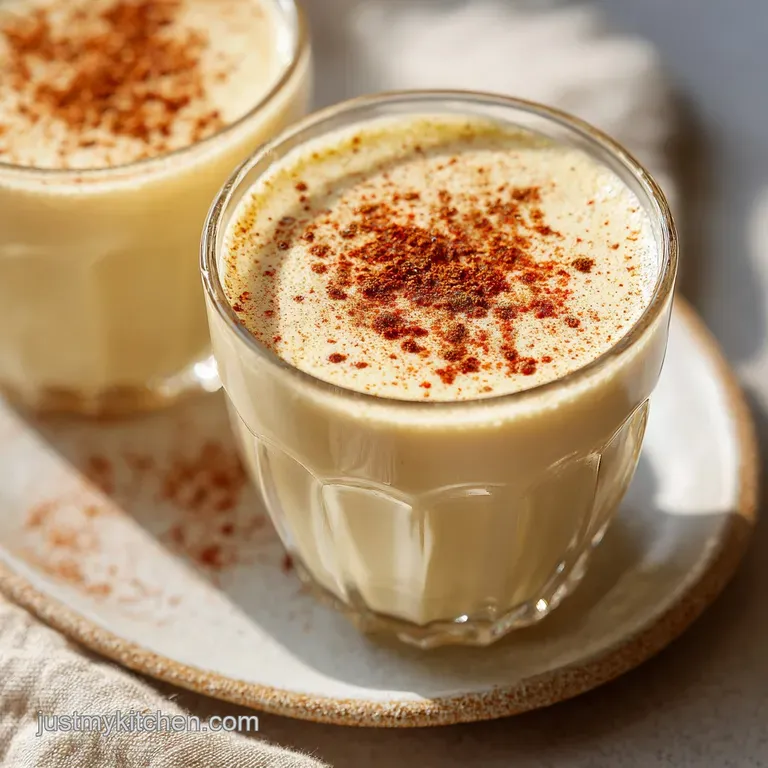
- Time: Active 10 minutes, Passive 5 minutes, Total 15 minutes
- Flavor/Texture Hook: Silky, nutmeg forward, and deeply creamy
- Perfect for: Christmas Eve gatherings, cozy fireside sipping, or holiday brunch
- Creating the Best Ever Homemade Eggnog
- Why Most Recipes Get This Wrong
- Essential Holiday Recipe Specs
- Selecting the Finest Recipe Elements
- Tools for a Smooth Finish
- The Gentle Heat Cooking Method
- Rescuing Your Holiday Custard
- Creative Holiday Flavor Twists
- Scaling for Large Parties
- Storage and Reheating Guidelines
- Perfect Holiday Pairing Ideas
- Recipe FAQs
- 📝 Recipe Card
Creating the Best Ever Homemade Eggnog
Imagine it's late December, the kind of evening where the frost patterns are crawling across the windowpane and the house smells faintly of pine needles and woodsmoke. In my kitchen, there’s always a small, heavy bottomed pot simmering on the stove.
The rhythmic sound of a wire whisk clicking against the side of a glass bowl is the heartbeat of our holiday preparations. For years, I watched my aunt stand by that stove, patiently waiting for those tiny bubbles to form at the edges of the milk, guarding the custard as if it were gold.
That’s the magic of a traditional drink like this; it isn’t just about the sugar or the cream, but the layers of warmth we build into it. I remember the first time I tried to rush it cranking the heat because I was impatient for a taste.
I ended up with what looked like sweet scrambled eggs in a pool of nutmeg milk. It was a disaster, but it taught me the most important lesson in holiday hosting: the best things in life require a gentle touch and a bit of patience.
This recipe is the result of those lessons, a return to the classic methods that make the season feel truly special.
We aren't just making a drink here; we’re creating a silken experience that coats the back of a spoon and warms you from the inside out. Using real egg yolks and heavy cream provides a body that no carton based version can replicate.
When you grate fresh nutmeg over the top, the aroma fills the room instantly, signaling to everyone in the house that the festivities have officially begun. Let’s walk through how to layer these flavors properly so you can avoid the mistakes I made and go straight to the reward.
Why Most Recipes Get This Wrong
Most people think the secret to a great drink is just adding more sugar, but it’s actually about the protein structure within the yolks. When we heat the milk and cream, we are preparing a environment where the yolks can thicken without curdling. The mistake most home cooks make is jumping the gun on the heat.
If you go too fast, the egg proteins bond too tightly and clump together. By using a low and slow approach, we allow those proteins to stretch out and trap the liquid, creating that velvety mouthfeel we all crave.
Protein Tempering: Gradually adding hot liquid to cold yolks prevents the proteins from "shocking" and scrambling.
Fat Saturation: The ratio of whole milk to heavy cream ensures the drink is rich but doesn't feel oily on the tongue.
Spice Infusion: Simmering the nutmeg and cinnamon directly in the dairy draws out the oils, which are more fragrant than dry spices added at the end.
Sugar Shielding: Whisking sugar into the yolks before heating creates a protective barrier that raises the temperature at which the eggs will curdle.
| Method | Texture | Effort | Best For |
|---|---|---|---|
| Stovetop | Fluid, pourable, velvety | Active whisking for 10 minutes | Classic drinking eggnog |
| Oven (Bain Marie) | Set, spoonable, thick | Hands off after prep | Eggnog pots de crème or custard |
While the stovetop method is our focus for the perfect drinkable consistency, some people enjoy baking this same mixture in a water bath to create a dessert. However, for that classic holiday sip, the stovetop offers much better control over the final viscosity.
The constant motion of the whisk ensures that no part of the custard stays in contact with the bottom of the pan for too long, preventing scorched spots that can ruin the entire batch.
Essential Holiday Recipe Specs
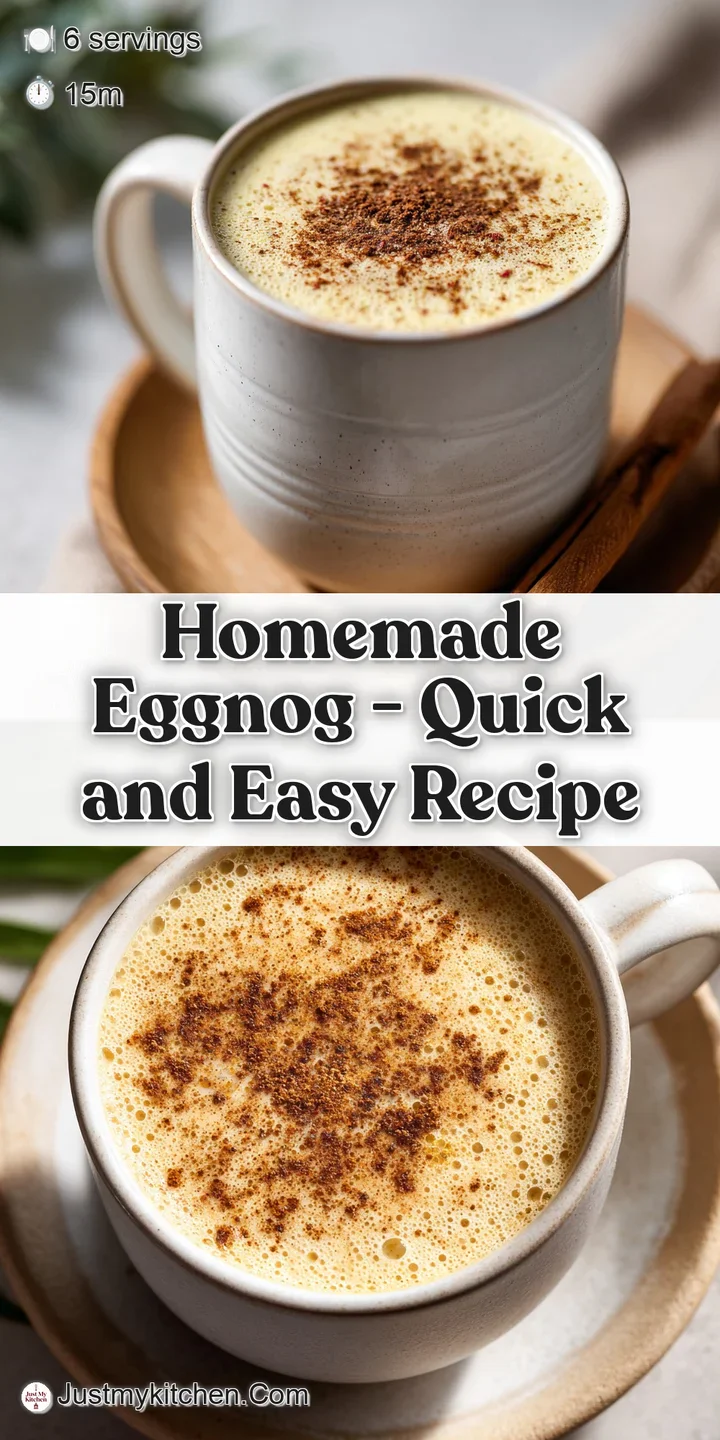
Before we get our hands messy, let's look at what we're actually building. This recipe is designed for a standard family gathering, yielding about six generous servings. It’s a dense, high calorie treat, meant to be sipped slowly while opening gifts or sharing stories.
Because we are working with fresh dairy and eggs, the quality of your ingredients will shine through. I always suggest using the freshest eggs you can find, as the yolks provide nearly all the color and "heft" of the drink.
| Component | Science Role | Pro Secret |
|---|---|---|
| Egg Yolks | Primary Thickener | Use room temperature yolks for a faster, smoother sugar integration |
| Whole Milk | Liquid Base | Don't use skim; the lack of fat will make the spices taste sharp |
| Nutmeg | Flavor Anchor | Grate it fresh; pre ground nutmeg loses its volatile oils within weeks |
The sea salt might seem like a small addition, but it is the "modern" twist that changes everything. It cuts through the heavy fat of the cream and makes the vanilla and cinnamon pop. Without that pinch of salt, the drink can often feel "flat" or overly sweet.
It’s these tiny layers of flavor that turn a simple recipe into something people will ask for year after year.
Selecting the Finest Recipe Elements
When you're standing in the grocery aisle, reach for the heavy cream with the highest fat content you can find. This isn't the time for "light" versions. The fat is what carries the flavor of the vanilla and nutmeg across your palate.
For the sugar, standard granulated sugar works best as it dissolves completely without leaving a gritty residue. If you want a more traditional, "olde world" feel, you could use a touch of brown sugar, but it will change the color of your final drink to a darker tan.
- 6 large egg yolks: These are the soul of the drink. Why this? They provide the lecithin needed to emulsify the fats into a smooth liquid.
- Substitute: 1 cup of silken tofu (blended) for a vegan ish base, though it won't be traditional.
- 0.5 cup granulated sugar: Provides the necessary sweetness and stabilizes the egg proteins. Why this? Sugar raises the temperature at which eggs coagulate, giving you a safety margin.
- Substitute: Maple syrup for a woody, autumnal flavor profile.
- 2 cups whole milk (473 ml): The hydrating element. Why this? Whole milk has enough fat to prevent the mixture from separating when chilled.
- Substitute: Oat milk (full fat) for a dairy-free alternative that still has body.
- 1 cup heavy cream (237 ml): Adds the luxury. Why this? It provides the thick, coating texture that defines a true eggnog.
- Substitute: Coconut cream, though it will add a distinct tropical flavor.
- 0.5 tsp ground nutmeg: The classic holiday aroma. Why this? Its earthy, slightly sweet scent is synonymous with winter celebrations.
- Substitute: Mace, which comes from the same plant but is slightly more delicate.
- 0.25 tsp ground cinnamon: A supporting spice. Why this? Cinnamon adds a subtle heat that balances the cool milk.
- Substitute: Allspice for a more complex, peppery kick.
- 1 tsp vanilla extract: The rounding note. Why this? Vanilla acts as a bridge between the spice and the sugar.
- Substitute: Almond extract (use only 1/4 tsp) for a marzipan like finish.
- 1 pinch fine sea salt: The flavor enhancer. Why this? It brightens the dairy and tames the richness.
- Substitute: Himalayan pink salt for a slightly more mineral taste.
Tools for a Smooth Finish
You don't need a professional kitchen to make a great Homemade Eggnog, but a few specific tools will make the process much less stressful. A heavy bottomed saucepan is non negotiable. Thin pans have "hot spots" that will cook your eggs instantly in one corner while the rest of the pot is still cold.
If you've ever had to scrub burnt milk off a pot, you know exactly what I'm talking about. It’s an approachable recipe, but the equipment handles the technical heavy lifting for you.
You'll also want a large balloon whisk. The goal during the yolk and sugar phase is to incorporate a bit of air, turning the mixture a pale, buttery yellow. A fork won't give you the same aeration. Finally, keep a fine mesh sieve nearby.
Even the most careful cook might have a tiny bit of egg that cooks too quickly, and straining the final product ensures a silken finish every single time. It’s the difference between a "good" homemade drink and one that feels like it came from a high end bistro.
Essential Tool Kit
- Heavy bottomed saucepan: For even heat distribution.
- Balloon whisk: To properly aerate the yolks.
- Fine mesh sieve: To remove any spice clumps or cooked egg.
- Instant read thermometer: To hit that 71°C sweet spot precisely.
- Large mixing bowl: Heat proof glass or stainless steel is best.
The Gentle Heat Cooking Method
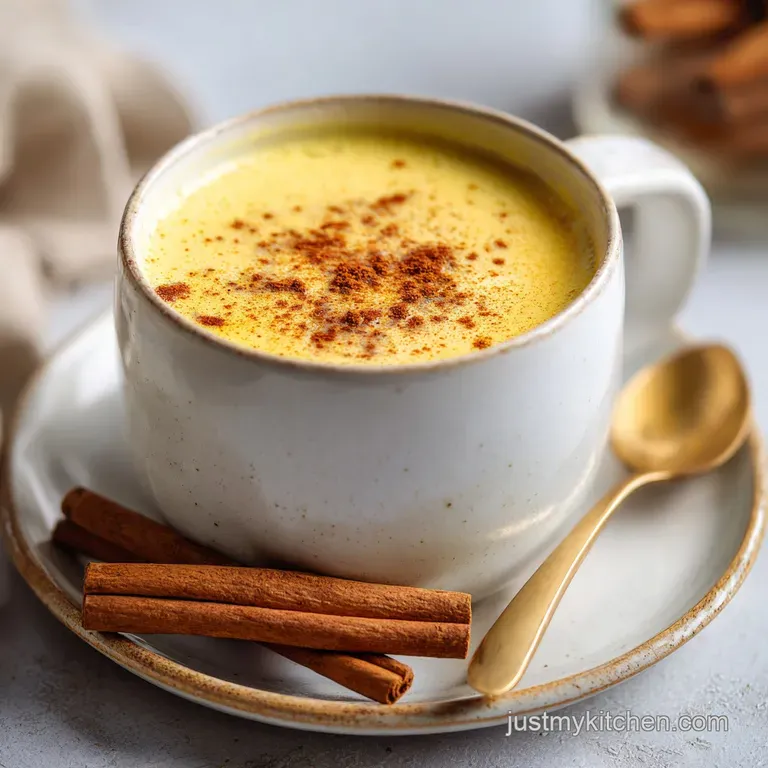
Right then, let's get into the actual making. This is where the magic happens, and the aromas will start to fill your kitchen. Remember to keep your heat low; we are aiming for a gentle transformation, not a rolling boil.
- In your medium heavy bottomed saucepan, whisk together the 2 cups whole milk, 1 cup heavy cream, 0.5 tsp nutmeg, 0.25 tsp cinnamon, and the pinch of salt. Place this over medium low heat. Watch for small bubbles at the edges. Note: This infusion stage ensures the spices fully hydrate and release their fragrance.
- While that dairy is warming up, grab your large mixing bowl. Add the 6 egg yolks and 0.5 cup granulated sugar. Whisk these vigorously for about 2 minutes until the mixture is pale yellow and has thickened slightly.
- Check your milk. It should be around 71°C (160°F). Take a small ladle of the hot milk and slowly drizzle it into the egg bowl while whisking the eggs constantly. This is called tempering. Note: By raising the temperature of the eggs slowly, we prevent them from scrambling.
- Continue adding the milk one ladle at a time until about half of it is in the bowl. Now, pour the warm egg mixture back into the saucepan with the remaining milk.
- Return the pan to low heat. Stir constantly with a wooden spoon or silicone spatula. Cook for about 5-8 minutes until the liquid coats the back of a spoon.
- As soon as it thickens, remove the pan from the heat immediately. You don't want the residual heat of the burner to keep cooking the eggs.
- Stir in the 1 tsp vanilla extract. The alcohol in the vanilla can evaporate if added too early, so we save it for the end to keep the flavor bright.
- Place your fine mesh sieve over a clean pitcher or bowl and pour the eggnog through. This catches any stray bits of spice or egg.
- Let the mixture sit on the counter for about 20 minutes to lose the initial heat, then cover it with plastic wrap. Press the wrap directly onto the surface to prevent a "skin" from forming.
- Chill in the refrigerator for at least 4 hours, though overnight is even better. The flavors will deepen and the texture will become even more velvety as it sits.
Rescuing Your Holiday Custard
Even with the best intentions, things can go sideways in the kitchen. The most common heartbreak is seeing tiny white or yellow flecks in your smooth liquid. This usually means the heat was a fraction too high or you stopped stirring for just a second too long. Don't panic!
Most issues with this recipe are textural and can be fixed before you serve it.
Solving Texture Issues
If your mixture looks "broken" or grainy, it’s likely that the egg proteins have started to clump. If it's caught early, you can often save it by immediately pulling it off the heat and whisking in a tablespoon of cold heavy cream. This drops the temperature instantly and can sometimes "reset" the emulsion.
If that doesn't work, a quick 30 second blast in a high speed blender can often shear those protein clumps back into a smooth state.
| Problem | Root Cause | Solution |
|---|---|---|
| Grainy/Curdled | Heat too high or fast | Strain through a fine sieve and blend on high for 30 seconds |
| Too Thin | Not cooked long enough | Return to low heat and stir until it reaches 71°C (160°F) |
| Too Thick | Overcooked or too much cream | Whisk in a splash of cold milk until desired consistency is reached |
Common Mistakes Checklist
- ✓ Always use a heavy bottomed pan to prevent localized scorching.
- ✓ Don't skip the straining step; it's the secret to a professional mouthfeel.
- ✓ Temper the eggs slowly patience here is your best friend.
- ✓ Never let the mixture come to a full, rolling boil.
- ✓ Whisk the sugar and yolks until they are truly pale, not just combined.
Creative Holiday Flavor Twists
Once you've mastered the classic, you might want to start playing with the "layers" of flavor. While the traditional version is a masterpiece on its own, modern kitchens love a bit of experimentation. You can easily shift the profile of this drink by changing the secondary spices or the type of sweetener used.
For example, replacing the vanilla with a bit of maple extract and using brown sugar creates a "Maple Spice" version that feels incredibly cozy.
A Lighter Homemade Eggnog Option
If the heavy cream feels like too much for your palate, you can replace it with additional whole milk or even a bit of half and half. The result will be a thinner, more drinkable liquid that still carries all the spicy notes of the original. Just be aware that it won't have that signature "coat your throat" richness.
For those looking for a non alcoholic homemade eggnog recipe that still feels like a treat, try adding a drop of rum extract for that classic flavor without the spirits.
The Toasted Marshmallow Variation
For a real "wow" factor at a party, you can top each glass with a dollop of marshmallow fluff and give it a quick char with a kitchen torch. The smoky sweetness of the toasted sugar against the nutmeg heavy custard is absolutely divine. If you're looking for other ways to use these holiday flavors, this base actually works quite well as a creamer for a Homemade Pita Bread pudding just soak the bread in the eggnog base and bake!
Scaling for Large Parties
When you're hosting a big crowd, you’ll likely need to double or triple this recipe. However, scaling a custard isn't as simple as just multiplying every number. When you increase the volume of liquid, it takes much longer for the heat to penetrate the center of the pot.
This means you have to be even more vigilant about stirring, as the milk at the bottom will be hot for a longer duration while you wait for the rest to catch up.
- Scaling Down (½ batch): Use 3 yolks and follow the steps exactly. The cook time will be shorter, roughly 4-5 minutes, so keep your thermometer handy.
- Scaling Up (2x-3x): When doubling, keep the spices at 1.5x initially. You can always add more at the end, but nutmeg can become overpowering very quickly in large batches. Use a very large pot to allow for plenty of whisking room.
- Baking Application: If you want to use this as a base for French toast or bread pudding, you don't need to chill it first. Use it while it’s slightly warm for better absorption into the bread.
Storage and Reheating Guidelines
Proper storage is the key to enjoying your hard work over several days. Because this is a cooked custard, it is more stable than "raw egg" versions, but it still requires careful handling. The flavors actually continue to marry and develop while sitting in the cold.
The nutmeg becomes more integrated, and the "eggy" taste mellows out into a rich, creamy profile.
Storage: Keep the eggnog in an airtight glass pitcher in the back of the fridge (the coldest part) for up to 3 days. Do not store it in the door, as the temperature fluctuations can cause it to spoil faster.
Freezing: Surprisingly, you can freeze eggnog! Pour it into an airtight container, leaving about an inch of headspace for expansion. It will keep for up to 2 months. When you're ready to use it, thaw it in the fridge overnight.
You may need to give it a vigorous whisk or a quick blend to bring the emulsion back together, as freezing can cause the fats to separate slightly.
Zero Waste Tip: If you find yourself with leftover eggnog that’s nearing its 3 day limit, don’t throw it out! It makes the most incredible base for pancakes or waffles. Simply swap the milk in your favorite recipe for eggnog. You can also use it as a decadent coffee creamer or even freeze it into ice cubes for an iced latte. If you're looking for a savory way to clear out the fridge after the holidays, try serving it as a side to a hearty Chicken and Dumplings recipe to balance out the salt with a bit of spice.
Perfect Holiday Pairing Ideas
When it comes to serving, presentation is half the fun. A simple glass mug is fine, but a crystal punch bowl with a ring of ice makes it feel like a real occasion. I like to serve mine with a cinnamon stick tucked into the side and a very fine dusting of freshly grated nutmeg right before it hits the table.
The contrast between the cold, creamy liquid and the dry, aromatic spice is what makes that first sip so memorable.
Flavor Profile Myths
There's a common misconception that "the more alcohol you add, the longer it lasts." While high proof spirits can act as a preservative, adding them to a cooked custard like this is more about flavor than safety. Another myth is that you can't make eggnog without heavy cream.
As we discussed in the "Creative Twists" section, you can certainly make a lighter version, though the mouthfeel will be significantly different. Finally,, searing or boiling the milk does not "infuse" it better; it only risks scorching the delicate proteins.
Classic Pairing Suggestions
- Gingerbread Cookies: The sharp snap of ginger and molasses perfectly cuts through the rich dairy.
- Salty Pretzels: A strange but effective combination that highlights the sea salt in the eggnog.
- Fruitcake: The dense, boozy fruit notes harmonize beautifully with the nutmeg and vanilla.
- Dark Chocolate: A square of 70% cacao chocolate on the side provides a bitter counterpoint to the sweet custard.
This Homemade Eggnog is more than just a drink; it's a labor of love that brings a sense of tradition and warmth to any table. By understanding how the heat interacts with the proteins and spices, you've moved beyond a simple recipe and into the realm of true holiday craft.
Enjoy the process, don't rush the chill, and may your kitchen be filled with the scent of nutmeg all season long.
Recipe FAQs
Is it true I must boil the milk to get the right flavor?
No, this is a common misconception. You should only heat the milk, cream, and spices to a gentle simmer around 160°F/71°C until small bubbles form, as boiling will curdle the eggs later in the process.
How to avoid a grainy texture in the final drink?
Whisk the egg yolks and sugar vigorously for at least one to two minutes until the mixture becomes pale yellow and thickened. If you enjoyed achieving this perfectly emulsified texture, you can apply that same whisking precision when preparing our silky zucchini soup for a smooth consistency.
Why is my eggnog curdled?
The mixture likely reached too high a temperature too quickly. You must temper the egg yolks by slowly adding the hot milk while whisking constantly, and then cook the final mixture over low heat only until it coats the back of a spoon.
How to ensure the eggnog has a professional mouthfeel?
Pour the finished custard through a fine mesh sieve before chilling it in the refrigerator. This final straining step removes any stray cooked bits, ensuring your eggnog is perfectly smooth.
How to properly store homemade eggnog?
Keep it in an airtight glass pitcher placed in the back of the refrigerator where temperatures remain coldest. You can safely store it for up to 3 days, during which time the flavors will continue to deepen and integrate.
Is it necessary to use a heavy bottomed saucepan?
Yes, this is essential for consistent heat distribution. A heavy bottomed pan prevents localized scorching during the tempering and thickening process, which is critical when working with delicate dairy and egg mixtures.
How to tell when the eggnog is finished cooking?
Check if the mixture coats the back of a spoon when stirred over low heat. Once it reaches this consistency, remove it from the heat immediately to prevent the eggs from overcooking and changing the desired texture.
Homemade Eggnog
Ingredients:
Instructions:
Nutrition Facts:
| Calories | 304 kcal |
|---|---|
| Protein | 6.1 g |
| Fat | 21.3 g |
| Carbs | 22.3 g |
| Fiber | 0.1 g |
| Sugar | 20.8 g |
| Sodium | 65 mg |
