Buttery Roasted Pears: Silky & Spiced
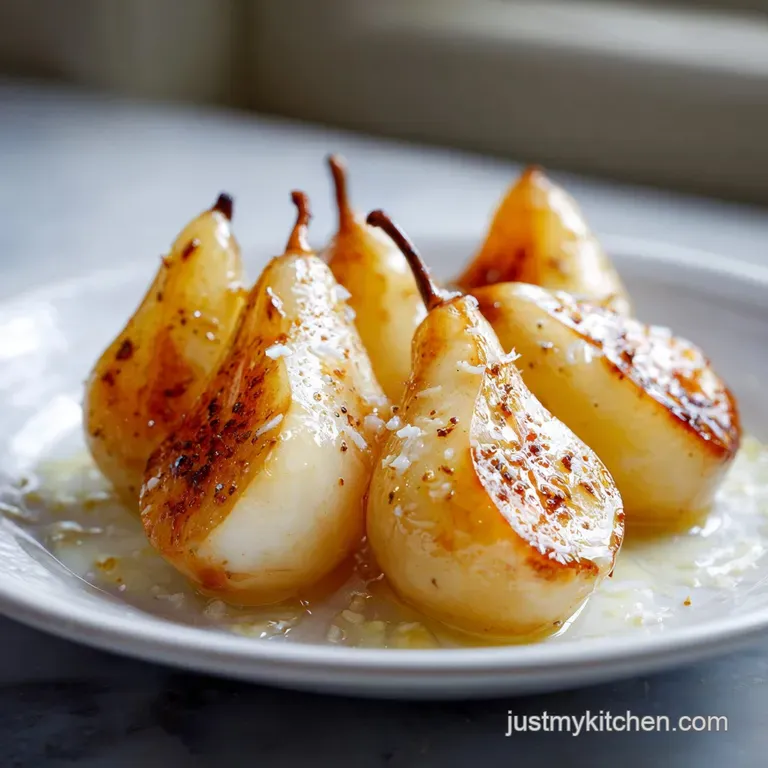
- Time: Active 10 minutes, Passive 20 minutes, Total 30 minutes
- Flavor/Texture Hook: Silky soft fruit with a crisp, nutty walnut finish and toffee like glaze
- Perfect for: Elegant dinner parties or a quiet Sunday night treat
- Master the Art of Simple Buttery Roasted Pears
- The Magic Behind These Caramelized Fruit Halves
- Precise Details for Your Fruit Sizzle
- The Essential Elements for Fruit Bliss
- Tools for Your Kitchen Magic
- Step-by-Step Path to Golden Fruit
- Solving the Mystery of the Soggy Pear
- Creative Twists for Your Fruit Dessert
- Storing and Reheating Your Roasted Gems
- Best Ways to Serve These Golden Halves
- Recipe FAQs
- 📝 Recipe Card
Master the Art of Simple Buttery Roasted Pears
Have you ever walked into a house and immediately felt like you were being hugged by the air itself? That is exactly what happens the moment these pears hit the oven. I remember the first time I made them; it was a dreary Tuesday, and I had a few Bosc pears that were looking a bit lonely in the fruit bowl.
I decided to toss them with whatever was in the pantry, and suddenly, the kitchen was alive with the smell of toasted cinnamon and bubbling sugar.
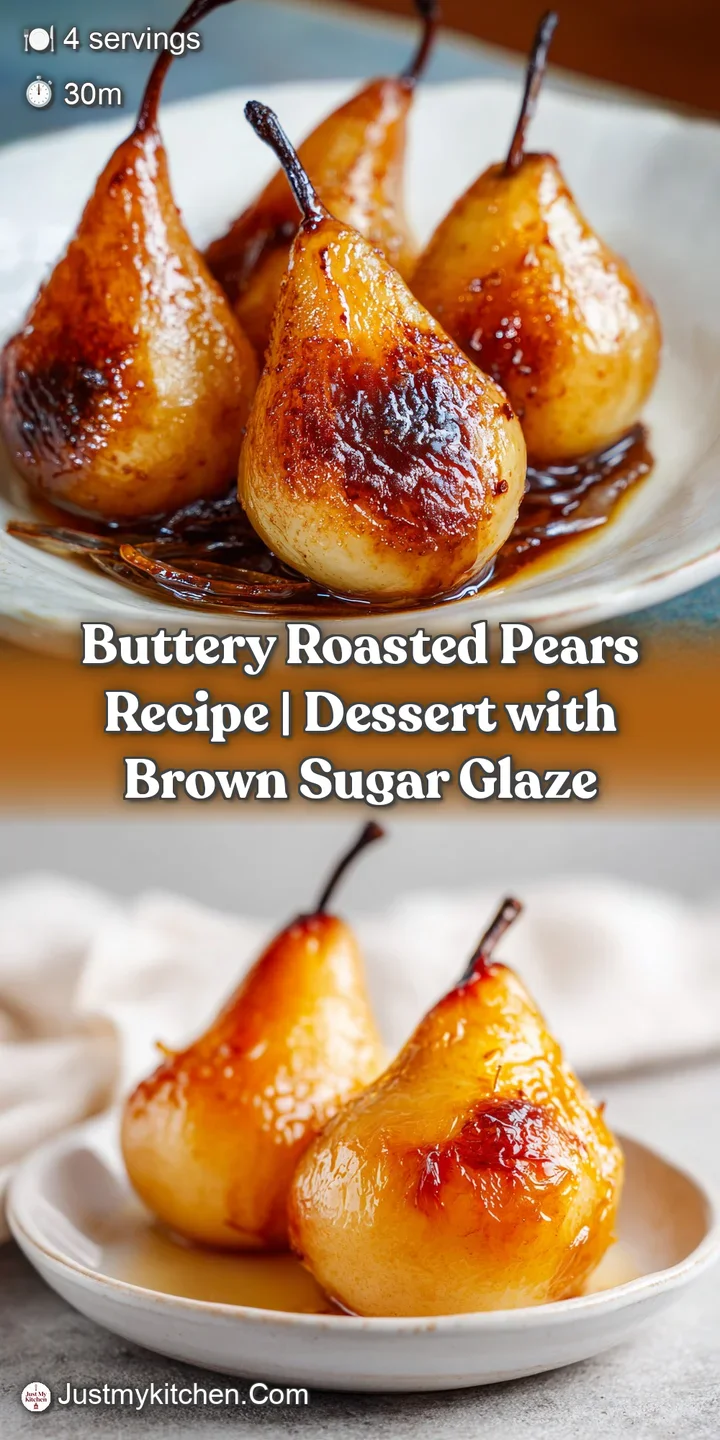
It's one of those recipes that feels like magic because the fruit does all the heavy lifting. You start with something firm and understated, and thirty minutes later, you're pulling out golden, translucent halves that look like they belong in a high end French bistro.
The butter pools in the hollowed out centers, mixing with the vanilla and pear juice to create a sauce so rich you'll want to drink it straight from the pan.
There is a specific joy in watching the edges of the pears begin to curl and darken. They don't just cook, they transform. If you have been looking for a way to use up fruit that isn't just another crumble or pie, you've found it. These are simpler, faster, and honestly, much more sophisticated.
We're going to walk through how to get that perfect glaze without turning the fruit into mush.
The Magic Behind These Caramelized Fruit Halves
The secret to this dish lies in the balance of heat and hydration. When we roast fruit, we aren't just heating it up; we are concentrating the flavor by evaporating excess water while simultaneously breaking down the cellular structure.
It's a delicate dance that results in a texture that is soft enough to yield to a spoon but firm enough to hold its shape on the plate.
- Pectin Breakdown: Gentle heat softens the pectin in the cell walls, turning the fruit velvety rather than fibrous.
- Maillard Reaction: The butter and brown sugar undergo a chemical transformation that creates hundreds of new flavor compounds, specifically nutty and toasted notes.
- Osmosis and Infusion: The sugar draws out the pear's natural juices, which then mix with the melted butter and vanilla before being re absorbed into the fruit.
The Secret to the Velvety Glaze
The brown sugar creates a concentrated syrup that clings to the pear's skin via surface tension. This allows the fruit to baste in its own juices throughout the entire roasting process.
| Method | Time | Texture Outcome | Best For |
|---|---|---|---|
| Oven Roasting | 20 minutes | Uniformly tender with a thick, syrupy glaze | A hands off approach for dinner parties |
| Stovetop Searing | 12 minutes | Highly caramelized edges but firmer interior | Quick cravings or a textured contrast |
| Air Fryer | 15 minutes | Slightly drier exterior with intense spice flavor | Small batches for one or two people |
If you love the warm, spiced notes of this dish, you might also find comfort in the nostalgic flavors of my Caramel Apple Dessert recipe, which uses a similar technique to create a decadent fruit base.
Precise Details for Your Fruit Sizzle
When we talk about roasting fruit, precision in your choice of produce is everything. You want a pear that can stand up to the heat without collapsing into a puddle. Bosc and Anjou are the gold standards here.
Bosc pears, with their long necks and cinnamon colored skin, have a denser flesh that holds its shape beautifully. Anjou pears are a bit juicier but still maintain their integrity when the oven gets hot.
Component Analysis
| Ingredient | Science Role | Pro Secret |
|---|---|---|
| Bosc Pears | Structural base and sugar source | Use pears that are "firm ripe" they should give slightly at the neck. |
| Unsalted Butter | Fat carrier for fat soluble spices | Grate cold butter into the sugar to ensure even distribution. |
| Vanilla Bean Paste | Aromatic depth and visual appeal | The tiny seeds provide a "speckled" look that signifies high-quality. |
| Lemon Juice | pH balancer and oxidation inhibitor | Fresh juice prevents browning and cuts through the heavy sugar. |
The butter here acts as a vehicle. Spices like cinnamon and ginger are fat soluble, meaning their flavors "bloom" and become more intense when they are suspended in melted butter. This is why we use a combination of melted butter for the initial coating and cold butter for the roasting sauce it ensures layers of flavor.
The Essential Elements for Fruit Bliss
To get started, gather your ingredients. We are using simple pantry staples, but the quality of your spices will make a world of difference. If your cinnamon has been sitting in the back of the cupboard since the last decade, it might be time for a fresh jar.
- 4 Large Bosc or Anjou Pears: Halved and cored. Why this? These varieties maintain their shape under high heat better than Bartlett pears.
- 1 tbsp Fresh Lemon Juice: To keep the fruit bright.
- 2 tbsp Unsalted Butter, melted: For the first coating.
- 3 tbsp Unsalted Butter: Cold, for the roasting sauce.
- 1/4 cup Light Brown Sugar: For that deep, molasses like sweetness.
- 1 tsp Ground Cinnamon: The classic warming spice.
- 1/2 tsp Ground Ginger: Adds a subtle, sophisticated heat.
- 1/4 tsp Sea Salt: To balance the sugar.
- 1 tsp Vanilla Bean Paste: For those beautiful black specks and intense aroma.
- 1/4 cup Toasted Walnuts, crushed: For a necessary crunch.
- 1 pinch flaky sea salt: For finishing.
| Original Ingredient | Substitute | Why It Works |
|---|---|---|
| Light Brown Sugar | Maple Syrup | Thinner consistency, but adds a lovely woody sweetness. |
| Vanilla Bean Paste | Vanilla Extract | Same flavor profile, though you'll miss the visual seeds. |
| Unsalted Butter | Coconut Oil | Adds a tropical note; keep it solid for the roasting step. |
For those days when you're in the mood for something brighter and more citrus forward, my Heavenly Lemon Cake recipe is a fantastic way to satisfy that sweet tooth with a completely different flavor profile.
Tools for Your Kitchen Magic
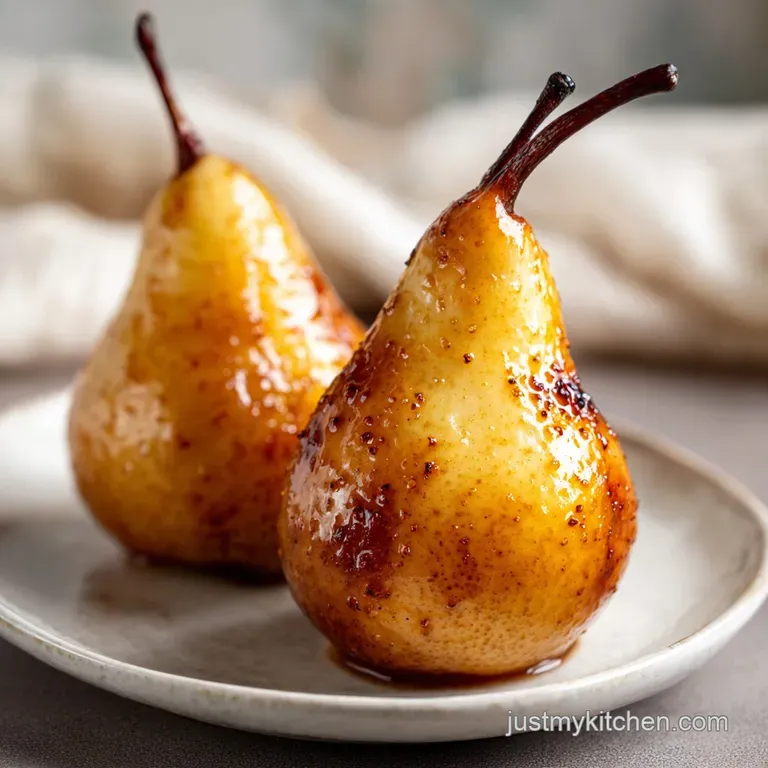
You don't need a lot of fancy gear to make this work, but a few specific items will make your life much easier. First, a good melon baller is the secret weapon for coring pears. It creates a perfectly round cavity that holds the butter and sugar like a little bowl.
If you don't have one, a sturdy measuring spoon (the teaspoon size) works in a pinch.
A heavy bottomed baking dish is also a must. I prefer ceramic or glass over thin metal. Metal pans can heat up too quickly and scorch the sugar before the pear is actually cooked through. A 9x13 inch (23x33 cm) dish provides enough room so the pears aren't crowded.
If they touch each other too much, they will steam rather than roast, and you'll miss out on those slightly crisped, caramelized edges.
Finally,, have a pastry brush handy. Basting the pears every ten minutes is the difference between a "good" dessert and a "restaurant quality" one. You want to keep that skin moist and coated in the simmering syrup.
step-by-step Path to Golden Fruit
- Preheat your oven to 400°F (200°C). Note: A high temperature is essential for immediate caramelization.
- Prep the fruit. Halve the pears lengthwise and use a melon baller to scoop out the core and the stringy bit leading to the stem.
- Acidulate the pears. Brush the cut sides with the 1 tbsp of fresh lemon juice immediately. Smell Check: You should notice a sharp, bright citrus scent.
- Initial coating. Brush the pears with the 2 tbsp of melted butter, ensuring every crevice is covered.
- Mix the spices. In a small bowl, whisk together the light brown sugar, cinnamon, ginger, sea salt, and vanilla bean paste.
- Apply the sugar. Press the sugar mixture onto the cut sides of the pears. Smell Check: The spicy, sweet aroma of cinnamon should be prominent now.
- Arrange and dot. Place pears cut side up in the baking dish. Cut the remaining 3 tbsp of cold butter into small cubes and place one in each pear cavity.
- Bake 20 minutes. Roast until the pears are tender when pierced with a knife and the edges are bubbling.
- Baste halfway through. At the 10 minute mark, use a spoon to scoop the melted butter sauce from the bottom of the dish and pour it over the fruit.
- Add the crunch. Sprinkle the toasted walnuts over the pears during the last 2 minutes of baking until they are fragrant and the sauce is a deep amber.
- Finish and serve. Remove from the oven, let rest for 5 minutes, and top with a tiny pinch of flaky sea salt.
Chef's Tip: Use a sharp paring knife to score a shallow crosshatch pattern into the flat side of the pear before adding the sugar. This allows the butter to penetrate deeper into the fruit.
Solving the Mystery of the Soggy Pear
The biggest frustration with roasting fruit is when it turns into baby food. This usually happens because of two things: either the pears were too ripe to begin with, or the oven temperature was too low.
If the oven isn't hot enough, the pears sit in their own moisture for too long, causing the fibers to disintegrate before the outside can brown.
Another common issue is the sauce breaking. If you see the butter separating into an oily layer and a sugary layer, don't panic. This often happens if the sauce gets too hot too fast. A quick whisk with a fork right in the pan usually brings it back together, or a tiny splash of heavy cream can act as an emulsifier.
Pear Texture Issues
If your pears are falling apart, they were likely overripe. Next time, look for pears that are as hard as an apple but smell fragrant at the stem. If they are too hard, they will take forever to cook and won't be as sweet.
| Problem | Root Cause | Solution |
|---|---|---|
| Soggy Texture | Oven temperature too low | Increase heat to 200°C and use a wider baking dish. |
| Separated Sauce | Fat and sugar overheated | Whisk in 1 tsp of warm water or cream to re emulsify. |
| Bland Flavor | Pears underripe or lack of salt | Add an extra pinch of salt and a dash more lemon juice. |
Common Mistakes Checklist
- ✓ Don't peel the pears; the skin holds the fruit together and adds fiber.
- ✓ Avoid "soft" pears like Bartlett unless you want a compote like result.
- ✓ Preheat the oven fully putting fruit in a cold oven leads to mush.
- ✓ Use a melon baller for the core; a knife often goes too deep and weakens the structure.
- ✓ Don't skip the basting step; it's what creates the shiny, lacquered finish.
Creative Twists for Your Fruit Dessert
While the classic cinnamon and ginger combo is hard to beat, there are so many ways to play with these flavors. If you're feeling adventurous, try a savory sweet miso twist. Swap the sea salt for 1 tsp of white miso paste whisked into the melted butter. It adds a fermented, salty depth that is absolutely addictive.
For a more "grown up" version, you can do a red wine and star anise infusion. Pour about 1/2 cup of a dry red like Cabernet into the bottom of the baking dish before roasting. The wine will reduce into a thick, purple syrup that looks stunning against the golden pears.
Add one whole star anise to the dish for a subtle licorice note.
If you are looking for a vegan substitution, coconut oil is your best friend here. Use the refined version if you don't want a coconut flavor, or the unrefined version if you love that tropical aroma. It behaves very similarly to butter in the oven, though the glaze will be slightly thinner.
Storing and Reheating Your Roasted Gems
These pears are best eaten fresh and warm, but life happens, and sometimes you have leftovers. You can store them in an airtight container in the fridge for up to 3 days. The sauce will solidify into a fudge like consistency, which is actually quite delicious on top of morning oatmeal.
When it comes to reheating, avoid the microwave if possible. It can make the fruit rubbery. Instead, place them in a small oven safe dish, add a tiny splash of water to the bottom, and heat at 150°C for about 10 minutes.
This gently wakes up the sugars and restores the velvety texture.
Zero Waste Tip: Don't throw away those pear cores and peels if you decided to peel them! You can simmer them with a bit of water and sugar to make a quick pear syrup for cocktails or sparkling water.
Even the leftover buttery sauce in the pan shouldn't be wasted drizzle it over pancakes the next morning.
Best Ways to Serve These Golden Halves
To make these truly "restaurant quality," focus on textural contrast. Serve the warm pear with something cold and creamy, like a scoop of high-quality vanilla bean ice cream or a dollop of thick Greek yogurt. The way the cold cream melts into the hot, spiced butter sauce is nothing short of heavenly.
For Restaurant Quality Plating
Place a single pear half in the center of a shallow bowl. Drizzle a generous spoonful of the pan sauce over the top, making sure it pools around the base. Finish with the toasted walnuts and a tiny sprig of fresh thyme or mint for a pop of color. It looks sophisticated but takes seconds.
Precision Adjustments and Baking Misconceptions
If you need to scale this recipe up for a crowd, remember that you'll need more surface area. Don't just double the ingredients and put them in the same pan. If you're making 8 pears instead of 4, use two separate baking dishes.
When scaling up spices, only increase the salt and ginger to 1.5x the original amount; spices can become overwhelming in large quantities.
Debunking Fruit Roasting Misconceptions: Many people believe that you have to peel pears for them to be tender. This isn't true! The skin becomes quite soft during the roasting process and actually provides a necessary structural "container" for the softened flesh.
Another myth is that you need to cover the dish with foil. Covering the dish traps steam, which prevents the sugar from caramelizing. Keep the dish uncovered for that beautiful, roasted finish.
Recipe FAQs
What type of pear holds up best to roasting?
Bosc or Anjou are the recommended varieties. These pears have denser flesh that maintains structural integrity under high heat without collapsing into mush.
How do I prevent the roasted pears from becoming watery or mushy?
Use a high oven temperature, 400°F (200°C), and keep the dish uncovered. The high heat immediately starts caramelizing the sugars, evaporating excess moisture before the fruit fibers break down entirely.
How to achieve a deep, glossy glaze on the pears?
Baste the pears every ten minutes using the melted butter and sugar sauce from the bottom of the pan. If you enjoyed mastering this caramelization technique, see how the same principle of basting leads to perfect results in our One Pan Lemon recipe.
Is it necessary to peel the pears before roasting?
No, peeling is not necessary. The skin remains soft after roasting and acts as a necessary container, helping the flesh hold its beautiful halved shape.
What can I substitute for brown sugar if I don't have any?
Maple syrup is the best immediate substitute, but use slightly less. Maple syrup is thinner, so start with 3 tablespoons instead of 1/4 cup of sugar; for a similar savory depth to the butter and spice base here, you can explore unique flavor profiles in the Cod Potatoes Rosemary recipe.
How long can I store leftovers and what is the best way to reheat them?
Store refrigerated leftovers for up to 3 days in an airtight container. Reheat gently in the oven at 300°F (150°C) with a splash of water to restore moisture, avoiding the microwave which can cause rubberiness.
What is the key difference between roasting and baking pears?
Roasting typically uses higher heat (above 375°F) than baking to encourage surface browning and caramelization. Baking uses gentler heat, often resulting in a softer, more uniform texture, similar to poaching in syrup.
Buttery Roasted Pears
Ingredients:
Instructions:
Nutrition Facts:
| Calories | 358 kcal |
|---|---|
| Protein | 2.2 g |
| Fat | 19.4 g |
| Carbs | 48.5 g |
| Fiber | 7.5 g |
| Sugar | 34.5 g |
| Sodium | 151 mg |
