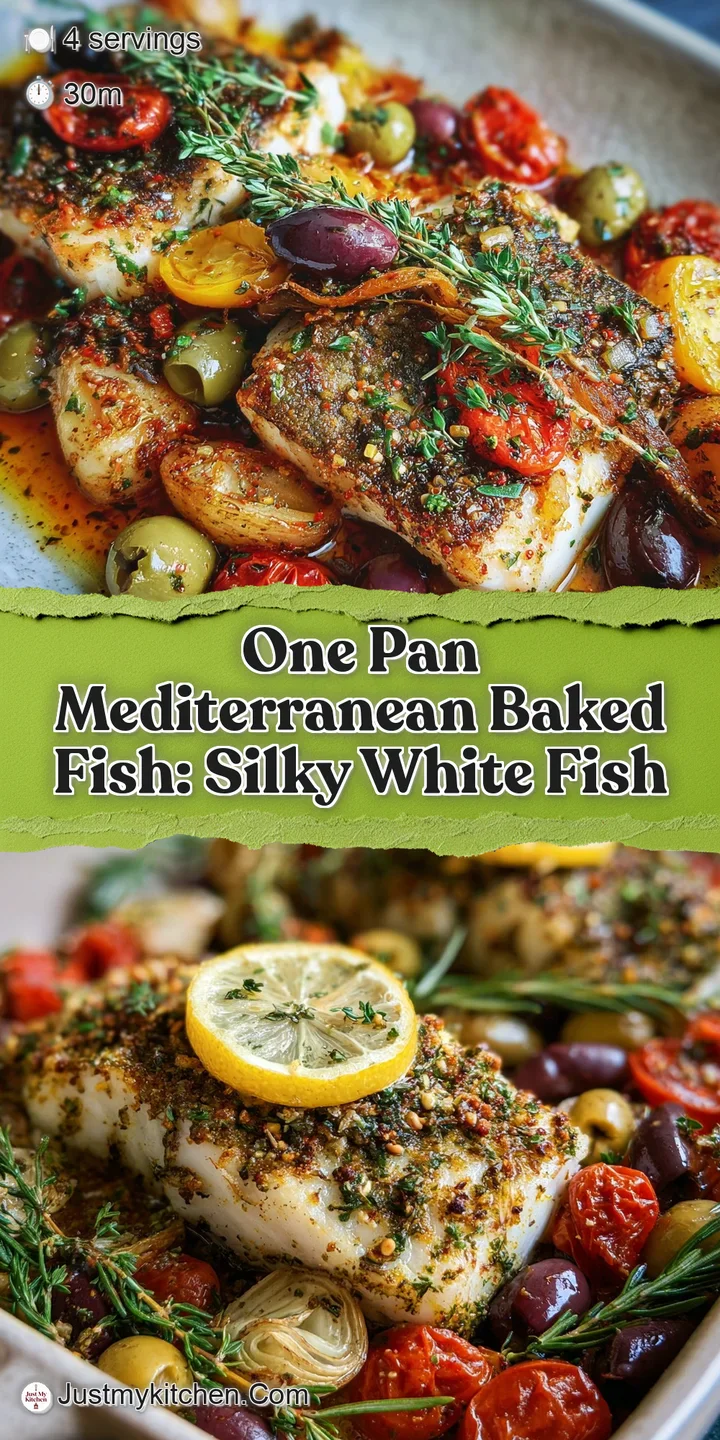
One Pan Mediterranean Baked Fish
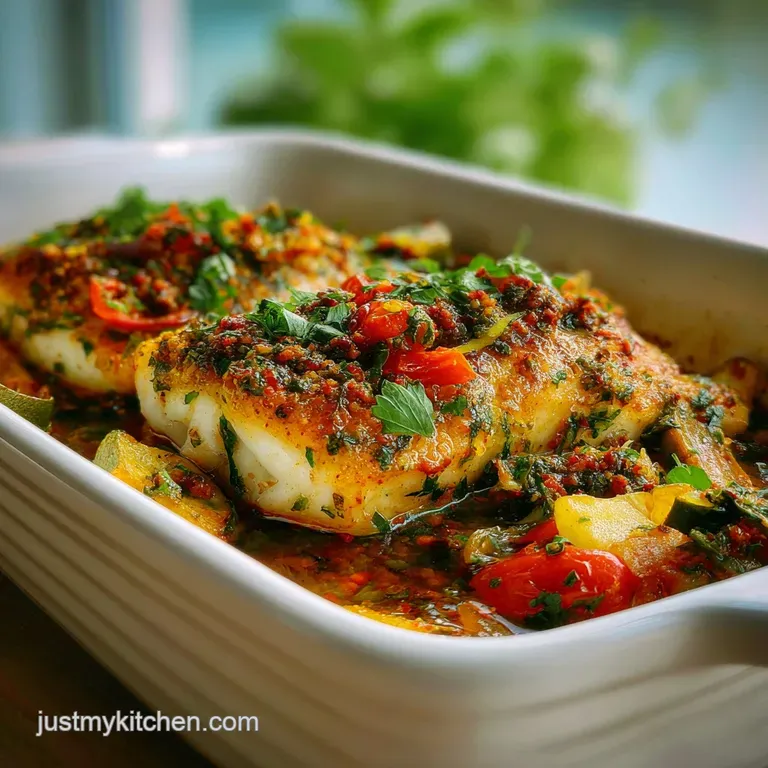
- Time: Active 10 mins, Passive 20 mins, Total 30 mins
- Flavor/Texture Hook: Silky white fish with tangy, salt forward pops of capers and olives
- Perfect for: Stress free weeknight dinners or a light, healthy family meal
- The Secret to One Pan Mediterranean Baked Fish
- High Heat Versus Slow Roasting Comparison
- The Science of Gentle Steam Roasting
- Essential Elements for a Zesty Fish Bake
- Ingredients and Practical Substitutions
- Simple Steps for Flawless Oven Results
- Solving Common Texture and Flavor Hurdles
- Adjusting Quantities for Different Groups
- Busted Kitchen Myths About Seafood
- Smart Storage and Waste Reduction Tactics
- Ideal Side Pairings for Fresh Seafood
- High in Sodium
- Recipe FAQs
- 📝 Recipe Card
The Secret to One Pan Mediterranean Baked Fish
The first time I tried making a fish tray bake, I ended up with a pool of watery liquid and overcooked, rubbery fillets. It was frustrating because the kitchen smelled like a seaside dream, but the texture was a nightmare. I realized I was treating the fish and the vegetables as if they had the same internal clock.
They don't. The breakthrough happened when I started slicing my onions paper thin and smashing the olives to release their oils immediately.
Now, when I slide this tray into the oven, the sizzle is almost instantaneous. Within minutes, the aroma of dried oregano and roasting garlic fills the house, making everyone gravitate toward the kitchen. You'll see the cherry tomatoes start to blister and sag, surrendering their sweetness to the pan.
It's not just a meal, it's a technique that respects the delicate nature of the protein while coaxing maximum flavor from the pantry staples.
This recipe is my go to when the fridge looks empty but I have those reliable jars of artichokes and olives tucked away. You're looking for that moment when the fish flakes easily with a fork but still holds its shape. We're aiming for a velvety finish that contrasts with the briny bite of the capers.
Let's get into how we make that happen without ruining a single extra pot.
High Heat Versus Slow Roasting Comparison
Getting the texture right depends heavily on your oven settings. While some prefer a low and slow approach, a quick blast of heat often yields better results for white fish.
| Method | Cook Time | Texture Outcome | Best For |
|---|---|---|---|
| High Heat (200°C) | 18-22 mins | Flaky with blistered veg | Busy weeknights |
| Low Heat (150°C) | 35-40 mins | Ultra tender, almost buttery | Thicker Halibut cuts |
| Broiler Finish | 12 mins + 2 mins | Charred edges, firm fish | Mimicking a grill |
Many cooks worry about the fish drying out at higher temperatures. However, the vegetables act as a moisture buffer. As the 475 ml (2 cups) of cherry tomatoes release their liquid, they create a humid micro climate on the pan. This prevents the hot air from stripping the moisture away from the 680 g (1.5 lbs) of fish. It's similar to the logic we use in our One Pan Lemon recipe where the citrus provides a protective steam.
The Science of Gentle Steam Roasting
Moisture Equilibrium: The vegetables release water vapor that surrounds the fish, preventing the delicate proteins from tightening and becoming tough.
Acid Induced Flaking: The 2 tbsp of lemon juice and tomato acids begin to break down the connective tissues in the fish fillets even before the heat fully penetrates.
Fat Emulsification: As the 60 ml (0.25 cup) of olive oil mixes with the released vegetable juices, it creates a temporary emulsion that coats the fish in flavor.
Essential Elements for a Zesty Fish Bake
Selecting the right ingredients makes the difference between a bland dinner and a Mediterranean escape. We focus on components that provide both texture and a hit of acidity.
| Component | Science Role | Pro Secret |
|---|---|---|
| White Fish Fillets | Lean protein source | Pat dry to ensure the oil clings to the surface |
| Kalamata Olives | Provides fat and salinity | Smash them with a knife to increase surface area |
| Canned Artichokes | Adds fiber and structure | Squeeze them over the sink to remove excess brine |
| Fresh Garlic | Sulfur based aromatics | Mince finely so it melts into the pan sauce |
Choosing your fish is the most important step here. Cod and Halibut are sturdy enough to handle the 20 minutes of roasting without falling apart. If you find yourself with salmon instead, the timing stays roughly the same, but the flavor profile shifts toward a richer, oilier finish. If you're looking for more inspiration with that specific protein, check out my Air Fryer Salmon recipe for a different spin.
Ingredients and Practical Substitutions
Here is exactly what you need to get this onto the table. I've included substitutions because I know what it's like to be halfway through a recipe only to realize the olives have vanished.
- 680 g (1.5 lbs) white fish fillets: Cod, Halibut, or Sea Bass work perfectly. Why this? Lean fish absorbs the surrounding Mediterranean flavors without becoming greasy.
- Substitute: Large peeled shrimp. Keep an eye on them as they cook faster.
- 475 ml (2 cups) cherry tomatoes: Use the sweetest ones you can find.
- Substitute: Grape tomatoes or chopped Roma tomatoes.
- 235 ml (1 cup) canned artichoke hearts: Drained and quartered.
- Substitute: Canned hearts of palm for a similar briny crunch.
- 120 ml (0.5 cup) Kalamata olives: Pitted and smashed.
- Substitute: Castelvetrano olives for a milder, more buttery taste.
- 1 large red onion: Thinly sliced into half moons.
- Substitute: Shallots if you want a more delicate, sweeter onion flavor.
- 2 tbsp capers: Drained.
- Substitute: Finely chopped green olives or extra salt.
- 60 ml (0.25 cup) extra virgin olive oil: Use the good stuff here.
- 1 large lemon: Sliced into rounds and juiced (you'll need about 30 ml juice).
- 4 cloves garlic: Mined or pressed.
- 1 tbsp dried oregano: For that classic Greek aroma.
- 2.5 ml (0.5 tsp) red pepper flakes: Adds a gentle background hum of heat.
- 60 ml (0.25 cup) fresh parsley: Roughly chopped for the finish.
Simple Steps for Flawless Oven Results
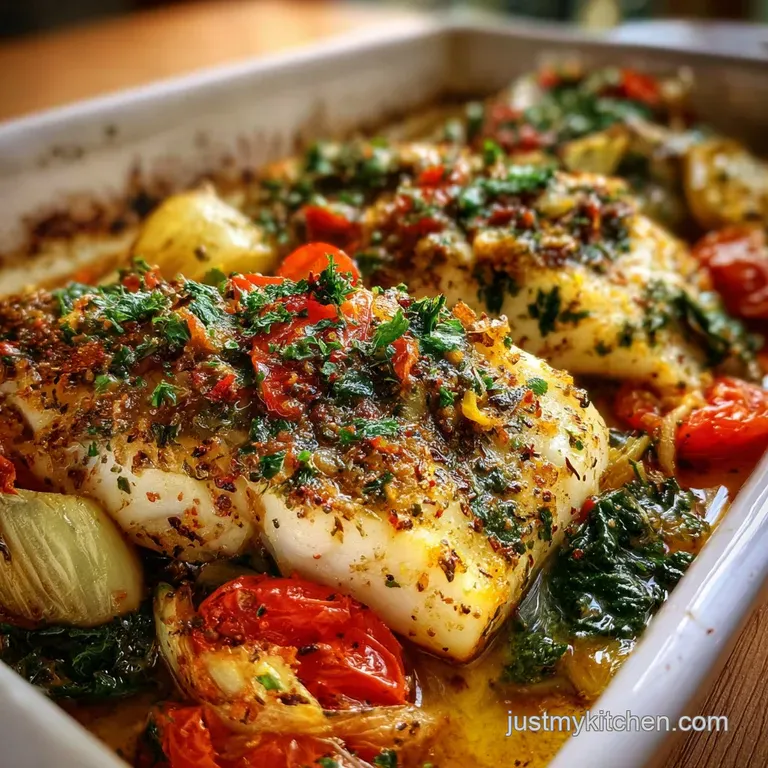
- Heat the oven. Set your rack to the middle position and preheat to 200°C (400°F). Note: A hot oven is crucial for blistering the tomatoes quickly.
- Prep the fish. Pat the 680 g of fillets with paper towels until bone dry. Do this until no moisture remains on the surface.
- Combine the vegetables. On a large rimmed sheet pan, toss the tomatoes, artichokes, olives, onion, and capers.
- Create the dressing. In a small bowl, whisk the olive oil, lemon juice, minced garlic, dried oregano, and red pepper flakes.
- Coat the base. Pour half of the oil mixture over the vegetables and toss with your hands until every piece is glistening.
- Nestle the fish. Push the vegetables aside to make "nests" for the fish fillets directly on the pan surface.
- Season the protein. Brush the remaining oil mixture over the fish and top with the lemon rounds.
- Roast the tray. Slide into the oven for 18 to 20 minutes until the fish is opaque and the tomatoes have collapsed.
- Check for doneness. Use a fork to gently pull at the thickest part of the fillet; it should separate into clean flakes.
- Add the freshness. Sprinkle the chopped parsley over the entire tray while it is still sizzling.
Solving Common Texture and Flavor Hurdles
The most common issue I see is "soupiness" on the pan. This usually happens if the artichokes weren't drained properly or if the fish was frozen and not thawed completely.
Why Your Fish is Soggy
If the bottom of your fish feels mushy, it's likely sitting in too much liquid. To prevent this, ensure your vegetables are spread in a single layer. If they are piled up, they will steam rather than roast.
| Problem | Root Cause | Solution |
|---|---|---|
| Rubbery Fish | Internal temp exceeded 63°C (145°F) | Pull it out when it looks slightly underdone; carryover heat finishes it |
| Bitter Sauce | Burnt garlic or lemon seeds | Add garlic halfway through or ensure it's tucked under the veg |
| Bland Flavor | Lack of salt or acid balance | Add an extra squeeze of fresh lemon and a pinch of flaky salt at the end |
Common Mistakes Checklist
- ✓ Never put frozen fish directly on the pan; it will release too much water.
- ✓ Ensure the oven is fully preheated before the tray goes in.
- ✓ Don't skip the step of patting the fish dry with paper towels.
- ✓ Use a large enough pan so the ingredients aren't crowded together.
- ✓ Avoid low-fat oil sprays; you need the real olive oil for the sauce to form.
Adjusting Quantities for Different Groups
When you need to feed a crowd or just yourself, a few simple tweaks keep the ratios in balance.
Scaling Down (2 servings): Use a smaller pan or a toaster oven tray. Halve all ingredients, but keep the lemon juice at 1 tbsp to ensure there's enough acid. Reduce the cooking time by about 4 minutes since a smaller mass heats up faster.
Scaling Up (8 servings): You must use two separate sheet pans. If you try to double everything on one tray, the vegetables will be 3 inches deep and will boil the fish instead of roasting it. When using two pans, rotate them from top to bottom halfway through the 20 minutes.
Keep the spices (oregano and red pepper) at 1.5x the original amount to avoid overpowering the delicate fish.
Busted Kitchen Myths About Seafood
One big myth is that you must sear fish in a pan before baking to "lock in juices." That’s just not true. Searing creates a crust through the Maillard reaction, but it doesn't seal anything. In a tray bake, we rely on the surrounding fat and moisture from the vegetables to keep the protein succulent.
Another common misconception is that "fresh is always better than frozen." In reality, most fish is flash frozen on the boat, which preserves the cellular structure better than a "fresh" fillet that has been sitting in a display case for three days. Just make sure you thaw it slowly in the fridge overnight.
Finally, don't believe that fish should never smell "fishy." While it shouldn't be pungent, a light scent of the ocean is normal. If the smell is overwhelming, a quick soak in milk for 10 minutes can neutralize the trimethylamine oxide that causes the odor, though it's rarely necessary for this recipe.
Smart Storage and Waste Reduction Tactics
Storage Guidelines: This dish is best eaten immediately, but leftovers will stay fresh in an airtight container for up to 2 days in the fridge. I don't recommend freezing the cooked fish, as the texture becomes grainy and the tomatoes turn to mush.
Reheating Tips: Avoid the microwave if you can! It will turn your fish into a rubber band. Instead, place the leftovers in a cold oven, set it to 150°C (300°F), and take them out as soon as the oven reaches temperature. This gentle warming preserves the flakes.
- The Pan Juices
- Never pour the liquid from the tray down the drain. It's liquid gold. Toss it with some cooked pasta or quinoa the next day.
- Veggie Scraps
- Save the ends of the red onion and the parsley stems for your next batch of homemade vegetable stock.
- Leftover Fish
- Flake any remaining fish and mix it with a bit of Greek yogurt and lemon for a quick Mediterranean fish salad lunch.
Ideal Side Pairings for Fresh Seafood
This tray bake is quite filling on its own, but a few sides can really round it out. I love serving this with a side of crusty sourdough bread to soak up all the emulsified oil and tomato juices.
If you want something heartier, a simple bed of Orzo or Couscous works wonders. The grains catch the capers and bits of garlic that fall to the bottom of the tray. For a low carb option, a side of roasted asparagus or a simple arugula salad with a balsamic glaze provides a sharp contrast to the salty olives.
Whatever you choose, keep it simple the fish is the star of this show.
High in Sodium
885 mg mg of sodium per serving (38% % of daily value)
The American Heart Association recommends limiting sodium intake to about 2,300mg per day.
Tips to Reduce Sodium in this Recipe
-
Reduce or Omit Capers-20%
Capers are a significant source of sodium. Reduce the amount used, or omit them entirely for a noticeable reduction in sodium. Consider substituting with lemon zest for brightness.
-
Reduce Kalamata Olives-15%
Kalamata olives are cured in brine and contain a lot of sodium. Reduce the quantity of olives or consider using a lower sodium olive variety. Taste as you go to control the flavor.
-
Low-Sodium Artichoke Hearts-15%
Canned artichoke hearts often contain added salt. Look for a no-salt added or low-sodium variety, or rinse regular artichoke hearts thoroughly before using to remove excess salt.
-
Enhance with Lemon-10%
Increase the amount of lemon juice used to enhance the dish's flavor profile, allowing you to reduce reliance on salty ingredients. The acidity brightens the flavors naturally.
-
Sauté Red Onion-5%
Sautéing the red onion will mellow its flavor, adding a touch of sweetness and richness to the recipe that can help balance the need for salt.
-
Spice It Up!
Use red pepper flakes and garlic to add flavor. Adjust the amount according to taste preference for a flavorful sodium free alternative.
-
Fresh Herbs
Don't underestimate the power of fresh herbs! Use a generous amount of fresh parsley and oregano to boost the flavor of your dish without adding any sodium. The more, the merrier!
Recipe FAQs
Can I use frozen fish fillets instead of fresh?
No, thaw them first. Placing frozen fish directly on the pan releases too much water, leading to a soggy, steamed bottom rather than a roasted one.
How do I prevent the white fish from becoming rubbery?
Pull the fish out when slightly underdone. The carryover heat after removing the tray from the oven will finish the cooking process to perfection.
How to ensure the vegetables roast instead of steam?
Spread all ingredients in a single layer on the sheet pan. Overcrowding traps moisture, forcing the vegetables to steam rather than allowing the dry heat to blister them effectively.
Is it true that searing the fish beforehand locks in moisture?
False. This is a common misconception. Searing only creates a crust via the Maillard reaction; in a tray bake, the surrounding vegetable moisture keeps the protein succulent.
What substitution works best if I don't have Kalamata olives?
Use Castelvetrano olives for a milder, buttery taste. They provide good fat content and saltiness without overpowering the delicate fish flavor.
How should I reheat leftovers to maintain the texture?
Use a low oven to warm gently. Place the leftovers in a cold oven, set the temperature to 150°C (300°F), and remove immediately once the oven is hot. This avoids the microwave's drying effect.
What can I serve with this one-pan meal for a healthier side?
Serve over a grain or with a sharp green salad. A bed of couscous catches the pan juices perfectly, or you could try something like our [Air Fryer Zucchini Fries No Flour in 20 Minutes] for a crisp texture contrast.
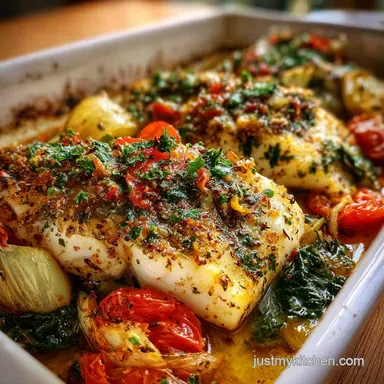
One Pan Mediterranean Fish Bake
Ingredients:
Instructions:
Nutrition Facts:
| Calories | 342 kcal |
|---|---|
| Protein | 32.6 g |
| Fat | 17.4 g |
| Carbs | 11.8 g |
| Fiber | 3.8 g |
| Sugar | 4.2 g |
| Sodium | 885 mg |
