German Potato Dumplings: Silky and Traditional
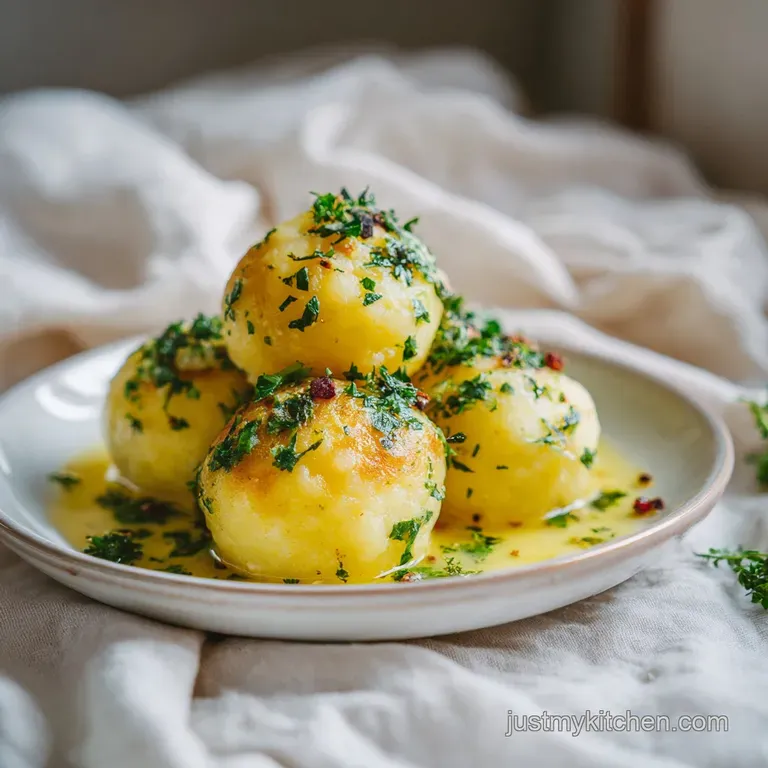
- Time:30 minutes prep + 20 minutes cook = 50 minutes total
- Flavor/Texture Hook: Silky, nutmeg scented clouds with a golden, crackling crouton center
- Perfect for: Sunday family roasts, holiday side dishes, or cozy winter comfort meals
- How to Master Authentic German Potato Dumplings Without Stress
- Why the Potato Starch and Evaporation Method Works
- Essential Ingredients for a Traditional Potato Dumpling Flavor
- The Right Tools for a Perfectly Smooth Texture
- Step-by-Step Guide to Shaping and Poaching Your Dumplings
- Fixing Common Issues with Potato Dumpling Texture and Shape
- Creative Ways to Customize Your Potato Dumpling Recipe
- Scaling Your Recipe for Large Groups
- Myths About Making German Potato Dumplings
- Best Methods for Storing and Reusing Your Leftovers
- What to Serve With Your Fresh Potato Dumplings
- Recipe FAQs
- 📝 Recipe Card
How to Master Authentic German Potato Dumplings Without Stress
Forget everything you have heard about German Potato Dumplings being a temperamental kitchen nightmare that requires years of practice. There is a common myth that you need "old" potatoes or a specific brand of German flour to keep these from disintegrating into a sad potato soup the moment they hit the water.
Honestly, that is just not true. I spent years worrying about the "right" potato until I realized that the secret is not in the age of the vegetable, but in how you handle the moisture inside it.
The first time I tried making these, I followed a recipe that told me to boil the potatoes and then just mash them. It was a disaster. The dough was so sticky I couldn't even roll it, and when I finally dropped a lumpy ball into the water, it vanished into a cloudy mess.
I felt like a total failure, but that mistake taught me the most important trick: the "steam dry" method. Now, when I see that first dumpling float to the surface, looking smooth and proud, I know it’s because of the simple science of evaporation, not luck.
We are going to make dumplings that have that specific, velvety texture you only find in a Bavarian beer hall. They should be heavy enough to soak up a rich gravy, yet light enough that they don't feel like lead in your stomach.
We'll use basic pantry staples potatoes, starch, and an egg to create something that feels like a warm hug on a plate. Trust me, once you hear that little "thump" of a perfectly formed dumpling landing on your plate, you will never go back to the boxed stuff.
Why the Potato Starch and Evaporation Method Works
Cooking these dumplings is less about "following a recipe" and more about managing water. If there is too much water inside the potato, the starch cannot do its job of binding everything together.
- Surface Evaporation: Heating the riced potatoes in the pot for 60 seconds drives off residual steam, which prevents the dough from becoming a gummy, sticky mess.
- Starch Gelatinization: The potato starch acts like a molecular glue that activates in the simmering water, creating a protective "skin" around the dumpling.
- Protein Structure: The lightly beaten egg provides a secondary structural net that helps the dumpling withstand the heat of the poaching water.
- The Lazy Bubble: Simmering instead of boiling prevents mechanical agitation from physically breaking the delicate starch bonds before they set.
Cook Method Comparison
| Method | Time | Texture | Best For |
|---|---|---|---|
| Traditional Poaching | 20 minutes | Silky and soft | Classic Sunday roasts |
| Pan Searing (Leftovers) | 8 minutes | Crispy and golden | Quick weekday lunch |
| Oven Warming | 15 minutes | Firm and dense | Serving large groups |
When you are deciding which way to go, remember that the initial poaching is non negotiable for the "authentic" feel. However, I actually think the pan seared version the next day is almost better.
There is something about the way the silky exterior turns into a thin, crackling crust in a bit of butter that is just addictive. If you are serving a big crowd, poaching them in batches and then keeping them warm in a covered dish in the oven works wonders.
Essential Ingredients for a Traditional Potato Dumpling Flavor
The beauty of this dish lies in how humble the ingredients are. You are essentially taking a bag of potatoes and turning them into something that people will fight over at the dinner table.
Component Analysis
| Ingredient | Science Role | Pro Secret |
|---|---|---|
| Russet Potatoes | High starch content | Never use "waxy" red potatoes; they won't bind. |
| Potato Starch | Binding agent | Always use potato starch over cornstarch for a silkier mouthfeel. |
| Nutmeg | Flavor enhancer | Freshly grated nutmeg has oils that deepen the potato's earthiness. |
| Bread Cubes | Textural contrast | Sauté them until they are darker than you think; they soften in the water. |
For the Dough
- 2.2 lbs Russet potatoes: These are peeled and quartered. Why this? Russets have the dry, mealy texture needed for a stable dough.
- 0.75 cup potato starch: This is the glue. Why this? It mimics the potato's natural structure better than all purpose flour.
- 1 large egg: Lightly beaten. Why this? The proteins provide a "safety net" to prevent the dumplings from falling apart.
- 1.5 tsp salt: For the dough itself.
- 0.25 tsp freshly grated nutmeg: Don't skip this. Why this? It provides that "authentic" German aroma that defines the dish.
For the Center & Poaching
- 1 slice white bread: Cut into small cubes.
- 1 tbsp unsalted butter: For browning the bread.
- 1 tbsp salt: For the poaching water.
- 4 quarts water: The "bath" for the dumplings.
If you don't have potato starch on hand, you can use all purpose flour, but be warned: the dumplings will be much denser and less "cloud like." They’ll taste fine, but they won't have that signature glide. For another comforting starch based meal, you might want to try a chicken and dumplings recipe if you prefer a one pot meal approach over a side dish.
The Right Tools for a Perfectly Smooth Texture
You don't need a kitchen full of gadgets, but there is one tool that is absolutely mandatory: a potato ricer. If you try to use a traditional masher, you will end up with small lumps. In most recipes, lumps are fine, but in German Potato Dumplings, a single lump can create a weak point where the dumpling might crack.
- Potato Ricer: This is the only way to get that fine, snowy texture. If you don't have one, a food mill also works.
- Large Pot: You need at least 4 quarts of space so the dumplings have room to float without bumping into each other.
- Slotted Spoon: Essential for gently lifting the dumplings out of the water without tearing the delicate skin.
- Small Skillet: For making those crunchy "Röstbrot" (crouton) centers.
step-by-step Guide to Shaping and Poaching Your Dumplings
- Boil the potatoes. Place the 2.2 lbs of quartered Russets in salted water and cook for 15-20 minutes. Check for tenderness with a fork; it should slide in with zero resistance.
- Dry the potatoes. Drain them and put them back in the hot pot over low heat for 60 seconds. Note: This is the most important step for removing moisture.
- Rice the potatoes. Process them while they are still steaming hot into a large bowl. Wait until they stop steaming before adding the egg so you don't scramble it.
- Toast the bread. Sauté the white bread cubes in 1 tablespoon of butter in a small pan. Cook until they are deep golden and give off a nutty aroma.
- Mix the dough. Sprinkle the potato starch, 1.5 tsp salt, and nutmeg over the potatoes. Pour in the beaten egg and fold gently by hand. Stop as soon as it's cohesive; overworking makes it tough.
- Shape the dumplings. With floured hands, grab a tennis ball sized piece of dough. Flatten it slightly in your palm.
- Add the heart. Place 2-3 croutons in the center. Fold the dough over them and roll it between your palms until it is a smooth, crack free sphere.
- Prepare the water. Bring 4 quarts of water and 1 tbsp salt to a simmer. Turn the heat down until you see only a few "lazy bubbles" rising.
- Poach the dumplings. Carefully drop them in. They will sink at first. Cook for 15-20 minutes. They are done when they float to the top and stay there for a minute or two.
- Serve immediately. Use a slotted spoon to remove them. Drain well before plating to avoid watering down your gravy.
Fixing Common Issues with Potato Dumpling Texture and Shape
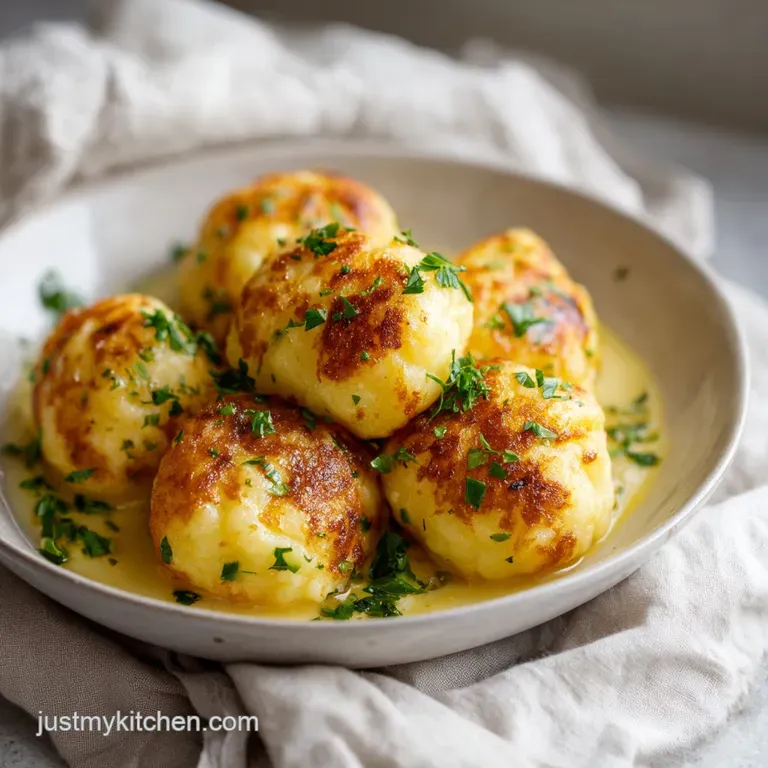
The most common heartbreak with this recipe is seeing your hard work dissolve in the pot. If this happens, don't panic. It usually means the water was too hot or the dough had too much moisture. I always recommend doing a "test dumpling" first. Drop one small ball into the water; if it holds, you are good to go.
If it starts to fray at the edges, knead in an extra tablespoon of potato starch into the remaining dough.
Troubleshooting Your Dumplings
| Problem | Root Cause | Solution |
|---|---|---|
| Dumplings falling apart | Water is boiling too hard or not enough starch | Lower heat to a simmer and add 1 tbsp starch to dough. |
| Texture is gummy | Potatoes were over mixed or not dried enough | Use a ricer and ensure the 60 second "steam dry" step. |
| Center is cold/hard | Dumplings are too large or didn't poach long enough | Ensure 15-20 minutes cook time and keep spheres tennis ball size. |
The physics of a gentle simmer is actually quite cool. When water boils vigorously, the bubbles create physical force that can "shatter" the delicate starch exterior before it has time to set.
By keeping the water at a lazy simmer, you allow the heat to penetrate the center of the dumpling slowly, ensuring the crouton heart is warm without the outside falling apart.
Common Mistakes Checklist
- ✓ Never use a blender or food processor (it turns the potatoes into glue).
- ✓ Don't skip the "steam dry" step in the pot.
- ✓ Ensure the poaching water is salted (it flavors the dumpling from the outside in).
- ✓ Avoid using cold, leftover mashed potatoes; they are too hydrated.
- ✓ Use "tennis ball" as your size guide too big and they won't cook through.
Creative Ways to Customize Your Potato Dumpling Recipe
Once you have the classic version down, you can start playing with the flavors. In different parts of Germany, you'll find all sorts of variations. Some people love adding a bit of chopped parsley to the dough for a fresh, herbal note. If you are looking for a lower carb alternative for a different meal, you might check out these sweet potato wedges which offer a similar comfort but with a different nutritional profile.
1. The Herb Infusion
Finely mince fresh parsley or chives and fold them into the dough along with the nutmeg. This adds a beautiful green fleck to the dumplings and cuts through the richness of a heavy meat gravy.
2. The Bavarian Bacon Center
Instead of bread cubes, try stuffing the center with a small piece of cooked, crispy bacon or "Speck." This gives a salty, smoky surprise that pairs perfectly with sauerkraut.
3. gluten-free Adaptation
This recipe is naturally very close to being gluten-free. Simply replace the white bread croutons with a gluten-free bread alternative or skip them entirely. The potato starch itself is gluten-free, so the dough structure remains safe.
Scaling Your Recipe for Large Groups
If you are hosting a big holiday dinner, you can easily double this recipe. Just be mindful of your pot size. You don't want the dumplings crowded; they need room to rise to the surface.
| Servings | Potato Weight | Starch Amount | Egg Count |
|---|---|---|---|
| 3 People | 1.1 lbs | 0.37 cup | 1 small egg (or half a large) |
| 6 People | 2.2 lbs | 0.75 cup | 1 large egg |
| 12 People | 4.4 lbs | 1.5 cups | 2 large eggs |
When scaling up, remember the rule of thumb for spices: don't just double the nutmeg and salt blindly. Use about 1.5x the amount first, taste a tiny bit of the dough, and adjust. Large batches of dough can also become wetter as they sit, so you might need a dusting of extra starch for the final few dumplings you roll.
Myths About Making German Potato Dumplings
One of the biggest myths is that you must use "old" potatoes that have been sitting in a cellar for months. While it's true that older potatoes have slightly less water, you can achieve the same result with fresh Russets simply by using the steam dry method I mentioned earlier.
Don't feel like you have to wait for your potatoes to sprout before you can enjoy this dish.
Another misconception is that searing the croutons is just "extra work." Some people think they will get soft anyway, so why bother? The truth is that the butter seared crust on the bread creates a barrier.
It keeps the bread from turning into mush inside the dumpling, providing that essential "shatter" when you cut into it with your fork.
Best Methods for Storing and Reusing Your Leftovers
If you have leftovers, you are actually in luck. Leftover dumplings are a delicacy in their own right. Store them in an airtight container in the fridge for up to 3 days. I don't recommend freezing them once they are cooked, as the texture becomes quite spongy and loses its velvety charm.
Zero Waste Tip: If you have leftover potato peels from the beginning of the recipe, toss them with a little oil and salt and bake them at 400°F (200°C) until crispy. They make a great kitchen snack while you wait for the dumplings to poach!
To reheat, the best way is to slice the cold dumplings into 1/2 inch thick rounds. Melt a generous knob of butter in a skillet and fry the slices until they are golden brown on both sides. Serve these with a fried egg on top for the ultimate "poor man's feast" the next morning.
What to Serve With Your Fresh Potato Dumplings
These dumplings are the ultimate "sauce sponges." They are designed to sit next to a dish with plenty of liquid. The classic pairing is Sauerbraten (German pot roast) or a creamy Mushroom Ragout. The acidity of the Sauerbraten gravy cuts through the starch perfectly.
If you are looking for something a bit lighter, they go beautifully with a simple roasted chicken. The key is to always have a "well" of gravy on the plate. Use your fork to break the dumpling open, let the gravy seep into the fluffy interior and mix with that buttery crouton, and you'll understand why this is the king of German side dishes.
Enjoy every velvety bite!
Recipe FAQs
What is a German potato dumpling called?
They are called Kartoffelklöße. This term translates directly to potato dumplings and is the standard name used across Germany for these potato based spheres.
Are potato dumplings the same as gnocchi?
No, they are distinct. While both use potatoes, German dumplings typically rely on potato starch and are often filled with croutons, whereas gnocchi usually incorporate wheat flour and are boiled for a much shorter time.
What to eat with German potato dumplings?
Pair them with rich, saucy dishes. They are traditionally served alongside roasted meats, gravy heavy stews, or red cabbage, as the dumplings are excellent at soaking up juices.
What is the German version of a dumpling?
Kartoffelklöße is the iconic potato based version. If you enjoyed mastering the texture control of these starchy spheres, see how the same principle of moisture management works in our Crispy Breakfast Potatoes.
Why did my dumplings fall apart in the water?
Your water was likely boiling too hard. You must maintain a gentle simmer with only a lazy bubble; vigorous boiling will physically break the dumplings apart before they have a chance to set.
How to ensure the texture isn't gummy?
Drain the potatoes well and shake them over low heat for 60 seconds. Removing surface moisture before ricing is essential to prevent a gummy, heavy interior.
Is it true I should use boiling water to cook the dumplings?
No, this is a common misconception. You must drop them into a pot of water kept at a lazy simmer, not a rolling boil, to ensure they cook through for 15-20 minutes without disintegrating.
German Potato Dumplings
Ingredients:
Instructions:
Nutrition Facts:
| Calories | 222 calories |
|---|---|
| Protein | 4.8g |
| Fat | 3.0g |
| Carbs | 45.8g |
| Fiber | 3.3g |
| Sugar | 1.2g |
| Sodium | 580mg |
