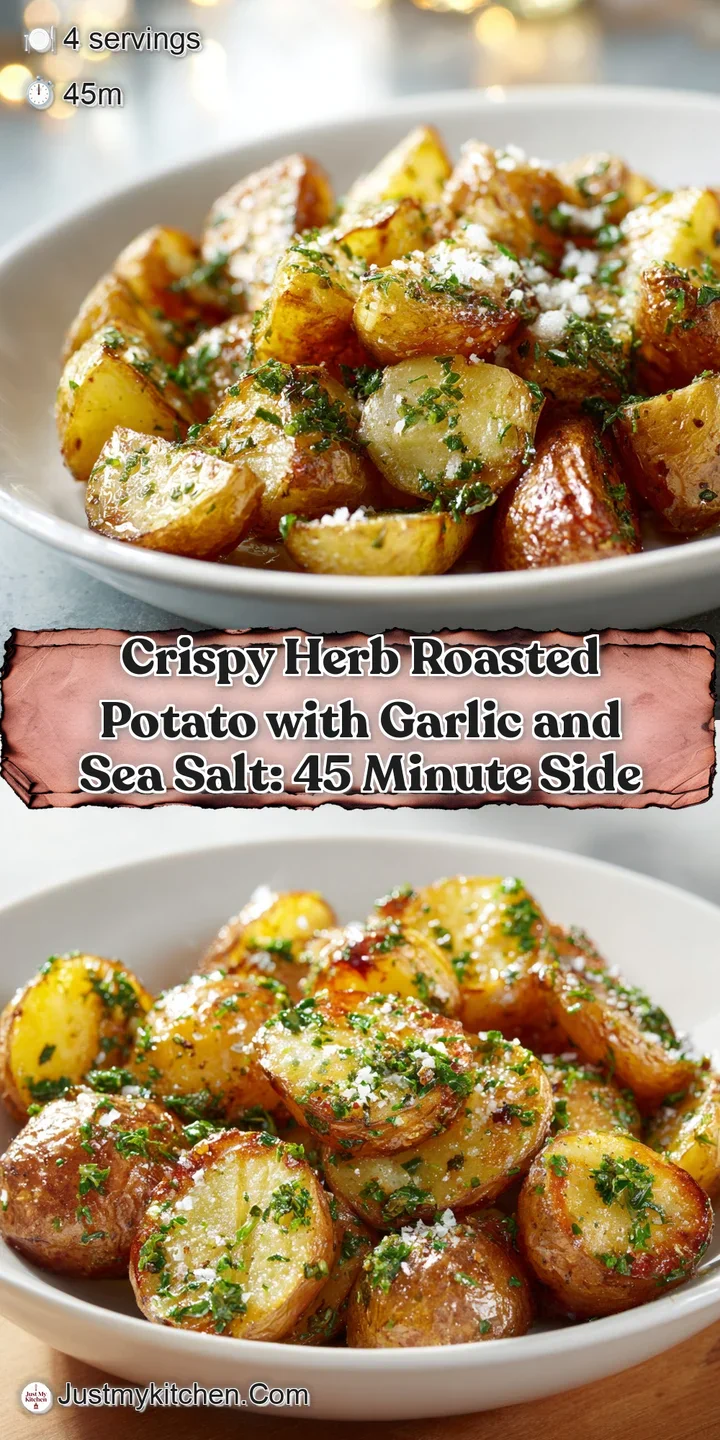
Crispy Herb Roasted Potato with Garlic and Sea Salt
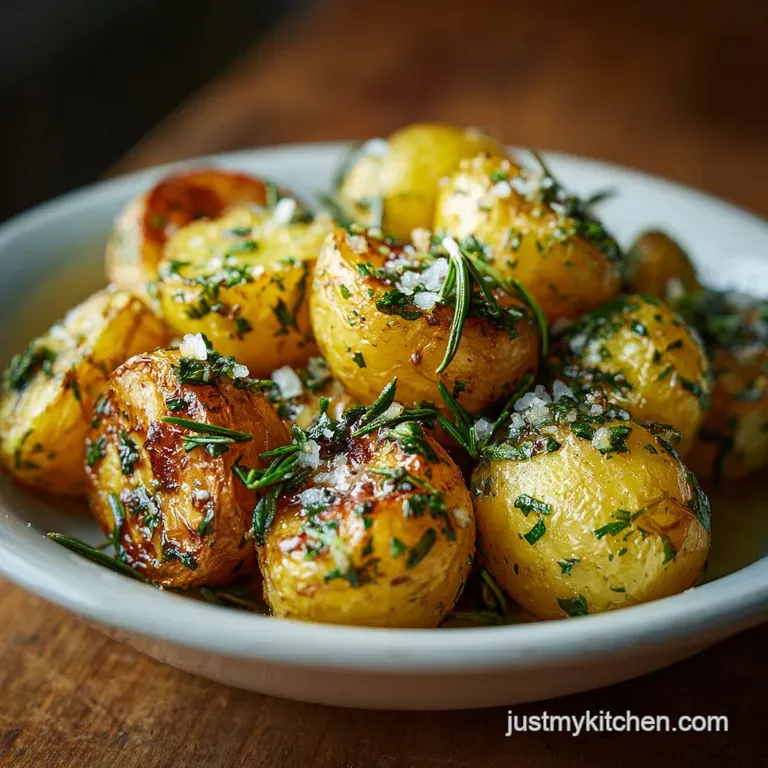
- Time: Active 10 minutes, Passive 35 minutes, Total 45 minutes
- Flavor/Texture Hook: Shatter crisp exterior with a buttery, garlic infused center
- Perfect for: Sunday roasts, holiday sides, or a comforting family weeknight dinner
- The Secret to Achieving the Ultimate Crispy HerbRoasted Potato with Garlic and Sea Salt
- Mastering the Science of the Crunch for Perfect Spuds
- The Molecular Magic of Your Potato Components
- Selecting Your Elements for Maximum Flavor Impact
- Essential Tools for a Golden and Shatter Crisp Finish
- Step by Step Guide to Golden Potato Perfection
- Common Pitfalls and How to Rescue Your Roasties
- Creative Variations and Modern Cooking Method Twists
- Storage Strategies and Reheating for Next Day Crunch
- Perfect Pairings for a Joyful Family Dinner Table
- Recipe FAQs
- 📝 Recipe Card
The Secret to Achieving the Ultimate Crispy HerbRoasted Potato with Garlic and Sea Salt
Picture this: you pull a baking sheet out of the oven and the sound isn't just a sizzle, it is a high pitched crackle. You reach for a potato, and the crust literally shatters under your fork, revealing an interior so soft it almost feels like mashed potatoes. That is the magic we are chasing today.
This recipe teaches you how to make the perfect Crispy HerbRoasted Potato with Garlic and Sea Salt.
Honestly, for years, I just tossed chopped spuds in oil and hoped for the best. They were always fine, but "fine" doesn't make your family fight over the last golden nugget on the tray. I realized the mistake was treating the potato like a single unit rather than a chemistry project.
Once you understand how to manipulate the starch on the surface, you unlock a level of crunch you didn't think was possible in a home kitchen.
We are going to use a few simple tricks things you already have in your pantry to transform humble tubers into something extraordinary. There is no fussy peeling required if you use thin skinned varieties, and the active work is done in about ten minutes.
Let's get into the "how" so you can get these in the oven tonight.
Mastering the Science of the Crunch for Perfect Spuds
The physics of a great roast potato comes down to surface area and pH levels. By boiling the potatoes in alkaline water, we break down the exterior just enough to create a "slurry" of starch that dehydrates and fries in the oven.
- Alkaline Breakdown: Adding baking soda to the water raises the pH, which breaks down the potato's pectin faster and creates a fuzzy, starchy surface.
- Surface Area Maximization: Roughing up the par boiled potatoes creates tiny nooks and crannies that catch the oil and turn into crispy peaks.
- Maillard Acceleration: The combination of high heat and healthy fats triggers a rapid browning reaction, developing deep savory flavors.
- Moisture Migration: Par boiling ensures the interior is fully hydrated and creamy before the dry heat of the oven locks in the crust.
| Method | Time | Texture | Best For |
|---|---|---|---|
| Standard Oven | 35 minutes | Thick, glass like crust | Big family dinners |
| Air Fryer | 20 minutes | Light and airy crunch | Quick weeknight meals |
| Cast Iron Skillet | 30 minutes | Extra dark, rustic bottom | Small batches/steaks |
Choosing the right tool depends on your schedule, but the oven method provided below offers the most consistent results for a full 2 lb batch. If you are looking for a morning version of this crunch, my Crispy Breakfast Potatoes recipe uses a similar logic for smaller bites.
The Molecular Magic of Your Potato Components
Understanding what each ingredient does helps you avoid the dreaded "soggy spud" syndrome. We aren't just seasoning; we are building a structural masterpiece.
| Ingredient | Science Role | Pro Secret |
|---|---|---|
| Yukon Gold Potatoes | High starch/medium sugar | Best balance of creamy interior and crispy shell |
| Baking Soda | Pectin softener | Only need a teaspoon to transform the texture |
| Extra Virgin Olive Oil | Heat conductor | Ensures even browning and adds a fruity pepperiness |
| Coarse Sea Salt | Moisture drawer | Pulls water to the surface to help the crust harden |
While we are focusing on potatoes here, the same principles of fat infusion apply to other savory dishes. For instance, the way garlic behaves in fat is a cornerstone of my Healthy OvenRoasted French recipe, which pairs beautifully with these potatoes.
Selecting Your Elements for Maximum Flavor Impact
For this recipe, we stick to high-quality basics. You don't need a gourmet larder, just the right versions of these pantry staples.
- 2 lbs Yukon Gold or Russet Potatoes: Cut into 1 inch chunks. Why this? Yukon Golds stay creamy; Russets get extra fluffy inside.
- Substitute: Red potatoes (Note: They stay firmer and won't get as "fuzzy").
- 1 tsp Baking Soda: The secret weapon for surface starch.
- 1 tbsp Coarse Sea Salt: For the boiling water and the roast.
- 3 tbsp Extra Virgin Olive Oil: For that classic Mediterranean flavor.
- Substitute: Duck fat or beef tallow for an even more intense crunch.
- 1 tsp dried Thyme, Rosemary, and Oregano blend: Provides a woody, earthy aroma.
- 0.5 tsp Cracked Black Pepper: Essential for a bite of heat.
- 5 Cloves Garlic: Minced fine. Why this? Fresh garlic is non negotiable for the infusion step.
- 1 tbsp Fresh Parsley: Finely chopped for a hit of brightness.
- 1 pinch Flaky sea salt: For the final texture.
Chef's Tip: Avoid using pre minced garlic from a jar. It lacks the pungent sulfur compounds that develop when you crush a fresh clove, which is what gives these potatoes their "wow" factor.
Essential Tools for a Golden and Shatter Crisp Finish
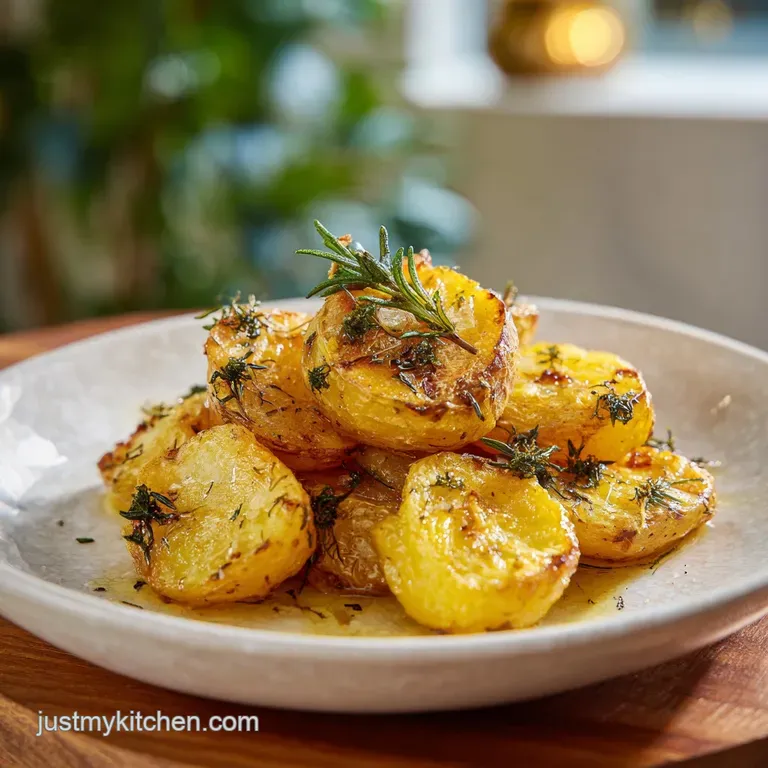
You don't need much, but a couple of items make this process much smoother and the results more reliable for a busy home cook.
2 Must Have Tools
- Large Rimmed Baking Sheet: Use a heavy duty aluminum pan (like a Nordic Ware half sheet). A thin pan will warp at high temperatures and cause uneven roasting.
- Large Colander: Essential for the "scuffing" phase. You need a sturdy one that can handle the weight of the potatoes being shaken vigorously.
The Power of the Pot
A 4 quart stockpot is ideal for boiling the 2 lbs of potatoes. You want enough room for the 2 quarts of water to circulate freely so the baking soda can reach every inch of the potato surfaces.
step-by-step Guide to Golden Potato Perfection
Phase 1: The Par Cook & Scuff
- Boil water. Place 2 qts water, 1 tbsp coarse sea salt, and 1 tsp baking soda in a large pot and bring to a rolling boil.
- Add potatoes. Drop in the 2 lbs of chunks. Cook 10 minutes until a knife meets just a little resistance in the center.
- Drain well. Dump the potatoes into a colander and let the steam escape for 30 seconds.
- Rough them up. Shake the colander vigorously until a thick layer of starchy paste covers the outside of every potato.
Phase 2: The over High heat Roast
- Preheat and prep. Set your oven to 400°F (200°C). Pour 3 tbsp olive oil onto your baking sheet and pop it in the oven for 2 minutes to get the oil shimmering.
- Toss carefully. Spread the scuffed potatoes onto the hot tray. Use a spatula to coat them in the hot oil.
- Roast long. Bake for 20 minutes. Do not touch them during this time to allow the bottom crust to set.
- Flip and crisp. Turn the potatoes and bake for another 10-15 minutes until they are deep golden and sound hollow when tapped.
Phase 3: The Garlic Infusion
- Mix seasonings. While roasting, mix the garlic, dried herbs, and pepper in a small bowl.
- Final toss. In the last 3 minutes of roasting, sprinkle the garlic herb mix over the potatoes and toss. Bake until garlic smells fragrant but hasn't turned bitter or brown.
- Finish. Remove from the oven, toss with fresh parsley and a pinch of flaky sea salt, and serve immediately.
Common Pitfalls and How to Rescue Your Roasties
Even with the best intentions, things can go sideways in the kitchen. Usually, it's a matter of temperature or crowding.
Why Your Potatoes Aren't Crisping
If your potatoes come out soft, it's usually because the oven wasn't hot enough or you overcrowded the pan. Steam is the enemy of the crunch. If the potatoes are too close together, they release moisture that gets trapped, effectively steaming them instead of roasting.
| Problem | Root Cause | Solution |
|---|---|---|
| Potatoes Sticking | Pan wasn't preheated | Heat the oil on the tray before adding potatoes |
| Burnt Garlic | Added too early | Only add garlic in the final 3-5 minutes of roasting |
| Mealy Texture | Wrong potato variety | Stick to Yukon Gold or Russet for high starch |
Common Mistakes Checklist
- ✓ Skipping the baking soda (you won't get that fuzzy starch layer).
- ✓ Not letting the steam evaporate after draining (wet potatoes won't crisp).
- ✓ Using a glass baking dish (glass doesn't conduct heat as well as metal).
- ✓ Forgetting to preheat the pan (this "sears" the potato bottom immediately).
- ✓ Stirring too often (you need the heat to build that initial crust undisturbed).
Creative Variations and Modern Cooking Method Twists
While the oven is my go to, you can adapt this flavor profile to suit your equipment or a specific dietary craving.
Garlic and Herb Potatoes Air Fryer Method
If you're in a hurry, follow the par boil and scuff steps exactly. Instead of the oven, toss the potatoes with the oil and air fry at 400°F (200°C) for 15-20 minutes, shaking the basket halfway through.
Add the garlic and herbs in the last 2 minutes. The airflow creates a incredibly light, popcorn like crunch.
The Spicy Mediterranean Twist
Swap the dried herbs for 1 tsp of smoked paprika and 0.5 tsp of cumin. Finish with a squeeze of fresh lemon juice along with the parsley. This version is fantastic if you are serving them alongside a bold dish like my Cheesy Italian Spinach recipe.
Decision Shortcut
- If you want Maximum Crunch: Use Russet potatoes and duck fat.
- If you want Fastest Cleanup: Use the air fryer method with Yukon Golds.
- If you want Traditional Flavor: Stick to the olive oil and rosemary/thyme oven method.
Storage Strategies and Reheating for Next Day Crunch
Roast potatoes are best fresh, but we've all had leftovers. The goal is to avoid the microwave at all costs it will turn your beautiful crust into a rubbery mess.
- Fridge Storage
- Keep leftovers in an airtight container for up to 4 days.
- Freezing
- You can freeze these! Lay them on a tray to freeze individually, then bag them. They stay good for 2 months.
- Reheating
- The best way to bring back the "shatter" is the air fryer at 350°F for 5 minutes, or a hot oven for 10 minutes.
Zero Waste Tip: If you have a handful of leftover potatoes that aren't enough for a full serving, chop them up and throw them into a frittata or use them as the base for a Sweet Potato Breakfast recipe style skillet the next morning.
Perfect Pairings for a Joyful Family Dinner Table
These potatoes are the ultimate wingman for almost any protein, but they really shine when paired with something that has a bit of sauce or a bright acidity.
The Sunday Roast Pairing
Serve these alongside a slow roasted chicken or a beef pot roast. The crispy exterior is the perfect vessel for soaking up extra gravy. If you are doing a fish night, they are a classic companion for my Cod Potatoes Rosemary recipe.
The Elevated Breakfast
Who says roast potatoes are just for dinner? I love serving these with soft poached eggs and a side of garlicky sautéed greens. The yolk acts as a natural sauce for the herby, salty crust.
- Precision Checkpoint 1: Ensure your potato chunks are roughly 1 inch; too small and they disappear into the crust, too large and the center won't be velvety.
- Precision Checkpoint 2: The water must have 1 tsp of baking soda; do not eyeball this, as too much can leave a metallic aftertaste.
- Precision Checkpoint 3: The oven must be at a true 400°F (use an oven thermometer if you aren't sure).
There you have it. No more mediocre spuds. Just a few simple tweaks to the chemistry, a bit of roughing up, and you have a side dish that honestly might just steal the show. Give it a try this weekend your family will thank you!
Recipe FAQs
How do you crispy garlic herb roast potatoes?
Par boil, rough up the exterior, and roast on a hot pan. First, boil the cut potatoes in water with a teaspoon of baking soda for 10 minutes until slightly tender. After draining, shake them vigorously in a colander to create a starchy coating, then toss with oil and roast at 400°F until golden.
What is the secret to crispy roasted potatoes?
Yes, there is a distinct scientific secret: adding baking soda to the par boiling water. This raises the pH level, softening the pectin on the potato surface, which allows you to create a thick layer of starch that fries beautifully in the oven.
What is the one ingredient upgrade for the crispiest roasted potatoes?
Use a small amount of baking soda in the boiling water. This alkaline agent breaks down surface starch far more effectively than salt alone, guaranteeing a shatteringly crisp exterior when roasted.
How do you make crispy garlic roast potatoes without burning the garlic?
Add the minced garlic only during the final few minutes of roasting. Toss the potatoes with oil and herbs first, roast them until almost done, then sprinkle the fresh garlic on top for the final 3 to 5 minutes until fragrant.
Should I boil the potatoes until they are completely soft?
No, they should only be par-boiled until a fork meets slight resistance. If they are too soft, they will turn to mush when you shake them to create the starchy surface needed for crisping.
What oil is best for achieving the highest crunch on herb roasted potatoes?
Use a high smoke point oil like avocado or refined olive oil, or use rendered fat. While you flavor with extra virgin olive oil, using duck fat or beef tallow provides superior heat conduction for a darker, crispier shell, similar to the fat technique used in our Honey Garlic Shrimp recipe for searing protein.
Can I use Yukon Gold potatoes instead of Russets for this recipe?
Yes, Yukon Golds are often preferred for a creamier interior. While Russets yield a fluffier inside, Yukon Golds maintain their shape better after the rough shaking process and still achieve excellent crispness.
Crispy Herb Roasted Potatoes
Ingredients:
Instructions:
Nutrition Facts:
| Calories | 271 kcal |
|---|---|
| Protein | 4.9 g |
| Fat | 10.4 g |
| Carbs | 41.8 g |
| Fiber | 5.2 g |
| Sugar | 1.8 g |
| Sodium | 485 mg |
