Cod Potatoes Rosemary Cream Sauce
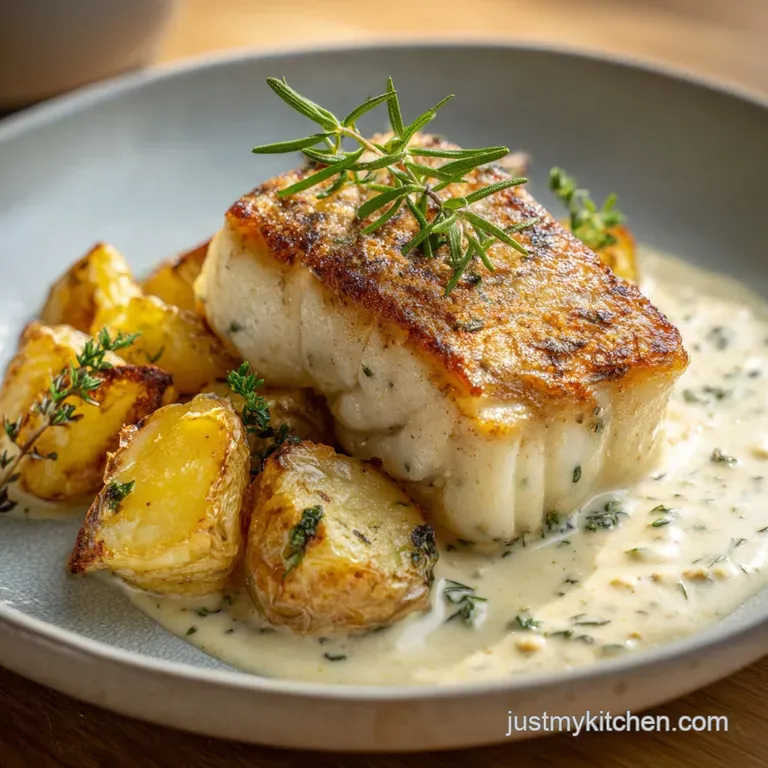
- Time: Active 15 minutes, Passive 30 minutes, Total 45 minutes
- Flavor/Texture Hook: Flaky white fish paired with velvety, rosemary scented potatoes
- Perfect for: Stress free weeknight comfort or a simple family dinner
- Mastering Cod Potatoes Rosemary Cream
- Why This Logic Works
- Ingredient Component Analysis
- The Essential Shopping List
- Tools for Every Kitchen
- Instructions for Meal Success
- Fixing Common Kitchen Errors
- Simple Diet Friendly Swaps
- Scaling for Any Crowd
- Kitchen Myths Debunked
- Storage and Waste Management
- Best Sides for Pairing
- Recipe FAQs
- 📝 Recipe Card
Mastering Cod Potatoes Rosemary Cream
The first time I attempted a version of this dish, I was terrified the rosemary would taste like I was chewing on a Christmas tree. I had the pan screaming hot, the kids were asking for snacks every three minutes, and I almost forgot to pat the fish dry.
But as soon as those 1.5 lbs Atlantic Cod Fillets hit the oil and began that rhythmic sizzle, the kitchen transformed. The sharp, woody scent of the herbs softened into something sweet and earthy, mingling with the garlic in a way that just felt like home.
What I love about this particular Cod Potatoes Rosemary Cream is that it doesn’t ask for much but gives back everything. It’s the kind of meal where you can actually hear the potatoes hitting the pan with a satisfying thud and watch the light cream transform from a liquid into a silky coating.
You don't need a culinary degree to make this work; you just need to trust the process and let the ingredients do the heavy lifting while you pour yourself a glass of water or wine, I won't judge.
Why This Logic Works
Understanding the "how" behind the pan makes you a better cook without even trying. Here is the breakdown of why this specific combination of fish and starch results in a win every single time you light the stove.
- Starch Cream Liaison: The baby Yukon Gold potatoes release just enough surface starch as they simmer to naturally thicken the light cream without needing a flour based roux.
- Thermal Protection: By nesting the cod amongst the potatoes, you create a humid micro environment that prevents the delicate protein fibers from tightening and becoming rubbery.
- Aromatic Infusion: The fats in the extra virgin olive oil and cream act as carriers for the rosemary’s essential oils, ensuring the flavor reaches the center of the fish.
- Acid Balance: A final splash of lemon juice cuts through the richness of the dairy, brightening the heavy notes of the garlic and herbs.
| Cook Method | Prep Time | Texture Result | Best For |
|---|---|---|---|
| Stovetop Skillet | 15 mins | Crispy potato edges, silky sauce | Fast weeknight dinners |
| oven-roasted | 10 mins | Consistent tenderness, softer potatoes | Hands off meal prep |
| Slow Cooker | 5 mins | Fall apart fish, very soft potatoes | Busy morning setups |
Whether you choose the skillet or the oven, the goal is the same: flaky fish and tender tubers. If you’re prepping this for a weekend brunch, it actually goes surprisingly well alongside my Cottage Cheese Blueberry recipe.
Ingredient Component Analysis
| Ingredient | Science Role | Pro Secret |
|---|---|---|
| Atlantic Cod | Lean Protein | Pat it bone dry to ensure the salt sticks and the flesh flakes properly. |
| Baby Yukon Gold | Starch Source | These have a naturally buttery texture and hold their shape better than Russets. |
| Light Cream | Fat Emulsifier | Provides the "velvety" mouthfeel without the heaviness of double cream. |
| Fresh Rosemary | Volatile Aromatics | Bruise the leaves with the back of your knife to wake up the oils before cooking. |
The Essential Shopping List
Finding the right ingredients makes a massive difference in the final texture of your Cod Potatoes Rosemary Cream. I always suggest looking for the thickest cod fillets you can find so they don't overcook before the potatoes are ready.
- 1.5 lbs Atlantic Cod Fillets: Choose firm, translucent fillets. Why this? It provides a clean, mild base that highlights the rosemary.
- Substitute: Halibut or Haddock (similar flaky texture).
- 1 lb Baby Yukon Gold Potatoes: Halved for quicker cooking. Why this? The waxier skin prevents them from turning into mashed potatoes.
- Substitute: Red bliss potatoes.
- 2 tbsp Extra Virgin Olive Oil: For the initial sear. Why this? Adds a fruity depth to the base of the sauce.
- Substitute: Avocado oil or unsalted butter.
- 3 large sprigs Fresh Rosemary: Don't use dried if you can help it. Why this? Fresh herbs provide a floral note rather than a dusty one.
- Substitute: Fresh thyme or sage.
- 0.5 cup Light Cream or Half and Half: The creamy core. Why this? Balances the acidity of the lemon and broth.
- Substitute: Full fat coconut milk for a dairy-free twist.
- 1 cup Low Sodium Chicken Broth: The simmering liquid. Why this? Controls the salt level while adding savory depth.
- Substitute: Vegetable broth or a splash of dry white wine.
Tools for Every Kitchen
You don't need a cupboard full of gadgets for this one. A heavy bottomed skillet like a cast iron or a thick stainless steel pan is your best friend here because it holds heat consistently. This ensures your 1 lb Baby Yukon Gold Potatoes actually brown instead of just steaming in their own moisture.
I also highly recommend using a wide, flat spatula (often called a fish turner). It’s thin enough to slide under the cod without breaking those beautiful flakes. For the garlic, a simple microplane or a sharp chef's knife will do the trick to get those 3 cloves minced fine enough to melt into the Rosemary Cream Sauce for Cod.
Instructions for Meal Success
Phase 1: Potato Foundation
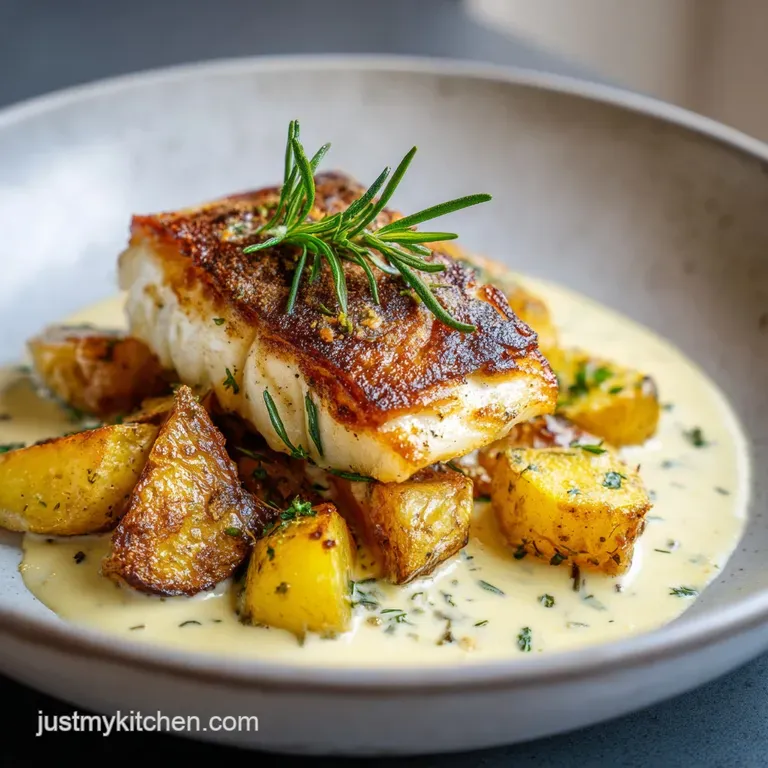
Halve your 1 lb Baby Yukon Gold Potatoes. Heat 2 tbsp Extra Virgin Olive Oil in your skillet over medium high heat. Add the potatoes cut side down and cook for 8 minutes until the edges are golden and starting to shatter.
Note: This creates the texture contrast you want in the final dish.
Phase 2: Aromatic Base
Push the potatoes to the edges of the pan. Drop in your 3 large sprigs Fresh Rosemary and 3 cloves minced garlic. Sauté for about 1 minute until the garlic is fragrant but not browned. You want the rosemary to sizzle and release its scent into the oil.
Phase 3: Searing the Cod
Season your 1.5 lbs Atlantic Cod Fillets with 0.5 tsp Kosher Salt and 0.25 tsp Cracked Black Pepper. Place them in the center of the pan. Cook for 3 minutes without moving them until a light crust forms on the bottom.
Phase 4: Simmering Liquid
Pour in 1 cup Low Sodium Chicken Broth. Bring the liquid to a gentle bubble, then turn the heat down to medium low. Cover the pan and let it simmer for 5 minutes until the fish is opaque and the potatoes are tender.
Phase 5: Creating the Cream
Remove the lid and pour in 0.5 cup Light Cream. Gently swirl the pan to incorporate the dairy with the broth. Simmer uncovered for 3-4 minutes until the sauce reduces and coats the back of a spoon.
Phase 6: Brightening the Finish
Turn off the heat. Squeeze in 1 tbsp Fresh Lemon Juice and give the pan one last gentle shake. Note: Adding lemon at the end prevents the cream from curdling during the over high heat phase.
Phase 7: The Final Rest
Let the dish sit in the pan for 2 minutes before serving. This allows the proteins to relax and the sauce to fully thicken around the Cod Potatoes Rosemary Cream.
Phase 8: Serving Setup
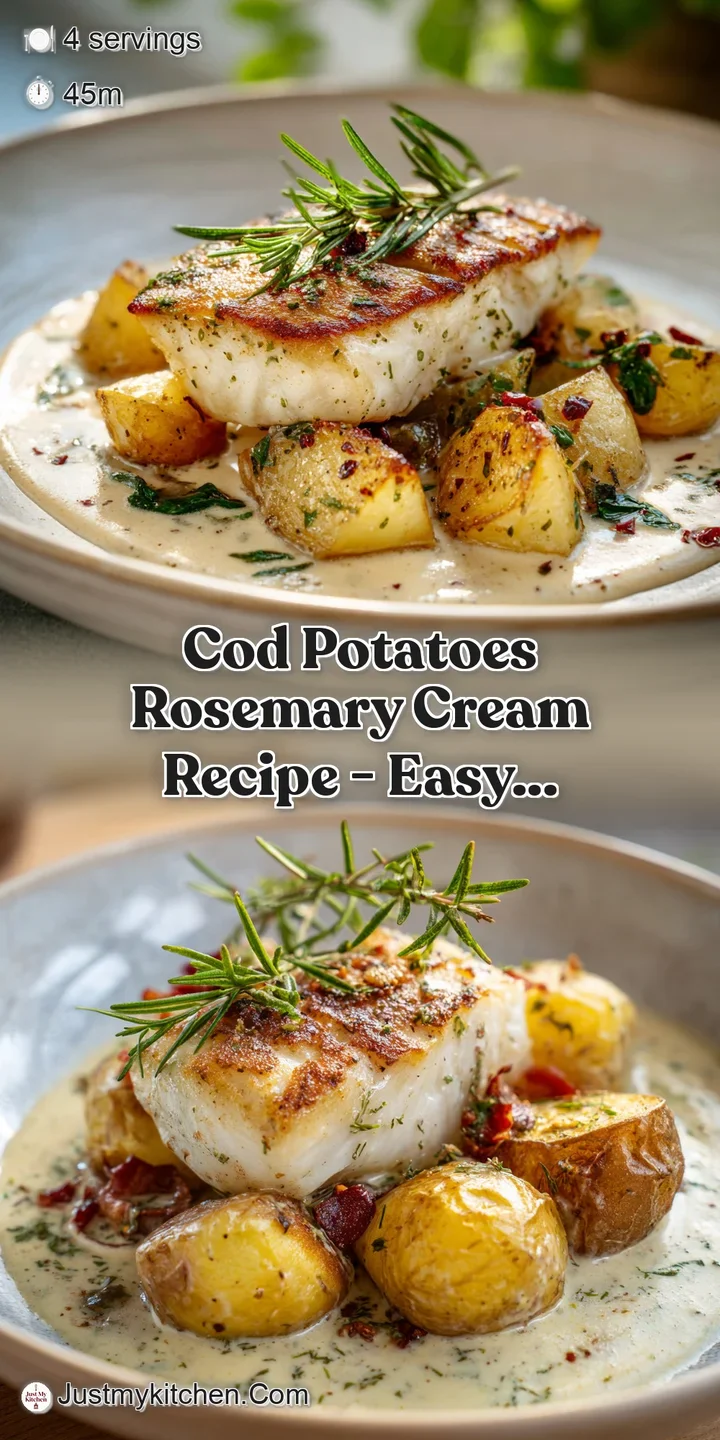
Plate the fish first, then spoon the potatoes and plenty of the Rosemary Cream Sauce for Cod over the top. Garnish with a tiny bit of fresh rosemary if you’re feeling fancy.
Fixing Common Kitchen Errors
Sauce Separation Issues
Sometimes the sauce can look a bit oily or broken. This usually happens if the heat was too high when the cream was added, or if the lemon juice went in too early. It’s a common hiccup, especially if you're multitasking.
Cod Texture Problems
If the fish feels tough, it likely spent too much time in the simmer. Cod is forgiving, but it has a limit. On the flip side, if it’s sticking to the pan, you probably tried to flip it before the proteins had a chance to naturally release from the heat.
| Problem | Root Cause | Solution |
|---|---|---|
| Broken Sauce | Heat too high for dairy | Remove from heat and whisk in a teaspoon of cold water. |
| Soggy Potatoes | Not enough initial searing | Ensure the pan is hot before adding the halved potatoes. |
| Dry Fish | Overcooked in the liquid | Reduce simmer time and check for flakiness at 4 minutes. |
Common Mistakes Checklist
- ✓ Pat the cod completely dry with paper towels to prevent steaming.
- ✓ Preheat your skillet for at least 3 minutes before adding the oil.
- ✓ Resist the urge to move the fish once it hits the pan; let it crust.
- ✓ Use low sodium broth to keep the final seasoning under your control.
Simple Diet Friendly Swaps
If you are looking to cut down on carbs, you can easily swap the potatoes for cauliflower florets. They won't provide the same starch for thickening, so you might want to simmer the sauce a little longer to get that velvety finish.
For a dairy-free version, full fat coconut milk is a spectacular substitute for the light cream; it adds a subtle sweetness that pairs beautifully with the rosemary and fish.
If you’re watching your salt intake, be sure to use a homemade vegetable stock or a very low sodium chicken broth. The rosemary provides so much natural "woodsy" flavor that you won't even miss the extra salt. For dessert after this savory meal, I usually whip up my Caramel Popcorn Recipe because the salt sweet balance is a great palate cleanser.
Scaling for Any Crowd
When scaling this dish down for two, use a smaller 8 inch skillet to ensure the liquid doesn't evaporate too quickly. You can follow the measurements exactly but halve the quantities. The cooking times will remain largely the same since the thickness of the fish doesn't change.
For scaling up to 8 people, I recommend working in batches. Sear all the potatoes first and set them aside, then sear the fish. Combine everything in a large casserole dish or a very wide braiser for the final simmer.
Keep the spices at 1.5x the original amount rather than doubling them to avoid an overpowering rosemary flavor.
Kitchen Myths Debunked
Many people think you have to flip fish multiple times to cook it evenly. In reality, the more you touch the cod, the more likely it is to fall apart. Let it sit, let it sear, and then let the steam from the broth finish the job.
Another common myth is that cream sauces always need a roux to be thick. As we’ve seen here, the starch from the Yukon Gold potatoes does the work for you. It’s a much lighter way to eat that still feels indulgent.
Storage and Waste Management
Storage: You can keep leftovers in an airtight container in the fridge for up to 2 days. To reheat, do it gently in a pan over low heat with a splash of broth to loosen the sauce. Avoid the microwave if possible, as it can turn the cod rubbery in seconds.
Zero Waste: Don't throw away those rosemary stems! You can toss them into a bag in the freezer to use later for flavoring stocks. If you have leftover sauce but no fish, it makes an incredible base for a quick potato soup the next day. Just add a bit more broth and some sautéed leeks. For another quick treat to use up pantry staples, try this Peanut Butter Cookie recipe.
Best Sides for Pairing
Since this dish is already quite rich and contains starch, I like to serve it with something bright and green. A simple steamed broccoli or a crisp arugula salad with a light vinaigrette works wonders. The peppery bite of arugula cuts right through the Rosemary Cream Sauce for Cod.
If you want to keep it simple, a crusty piece of sourdough bread is mandatory for mopping up the extra sauce. There is nothing worse than seeing that herb flecked cream go to waste on the bottom of the plate!
For a different flavor profile, you could even serve it alongside a citrus based side to echo the lemon in the sauce.
Recipe FAQs
Is it necessary to sear the cod before simmering it in the cream sauce?
Yes, searing is highly recommended. A quick sear creates a delicate crust that helps the cod hold its shape and prevents it from breaking down when submerged in the liquid.
How do I prevent the light cream from splitting or curdling when added?
Reduce the heat significantly before adding the cream. Ensure the broth is at a gentle simmer, never a rapid boil, and add the lemon juice only after the cream is incorporated and heat is reduced.
What is the best potato variety to use for this dish?
Yukon Gold or other waxy potatoes are best. They maintain their shape well during simmering while releasing just enough surface starch to naturally thicken the sauce, which is similar to the starchy foundation we build in the Tomato Basil Tortellini recipe.
How to ensure the rosemary flavor infuses the sauce without tasting bitter?
Bruise the fresh rosemary sprigs firmly with the back of your knife before adding them to the hot oil. Cook the herb briefly with the garlic to wake up the oils, but remove the thick stems before adding the liquid.
Can I substitute the cod with a firmer fish, and how does that affect cooking time?
Yes, halibut or haddock work well as substitutes. Use slightly less simmering time for halibut as it tends to cook faster than cod, especially when cooking alongside the potatoes.
What is the proper way to reheat leftovers without drying out the fish?
Reheat gently on the stovetop over low heat. Add a tablespoon of broth or extra cream per serving to loosen the sauce and cover the pan briefly to create steam, preventing the fish protein from tightening.
Can I make this recipe low-carb by omitting the potatoes entirely?
No, omitting potatoes will drastically change the sauce consistency. If removing carbs, replace the potatoes with cauliflower florets, but be aware you may need to simmer longer or add a small amount of cornstarch slurry for the necessary body, unlike our Cottage Cheese Egg recipe where volume isn't sauce dependent.
Cod Potatoes Rosemary Cream

Ingredients:
Instructions:
Nutrition Facts:
| Calories | 334 kcal |
|---|---|
| Protein | 33.8 g |
| Fat | 11.6 g |
| Carbs | 21.5 g |
| Fiber | 2.4 g |
| Sugar | 1.8 g |
| Sodium | 485 mg |
