Garlic Parmesan Sweet Potato Wedges
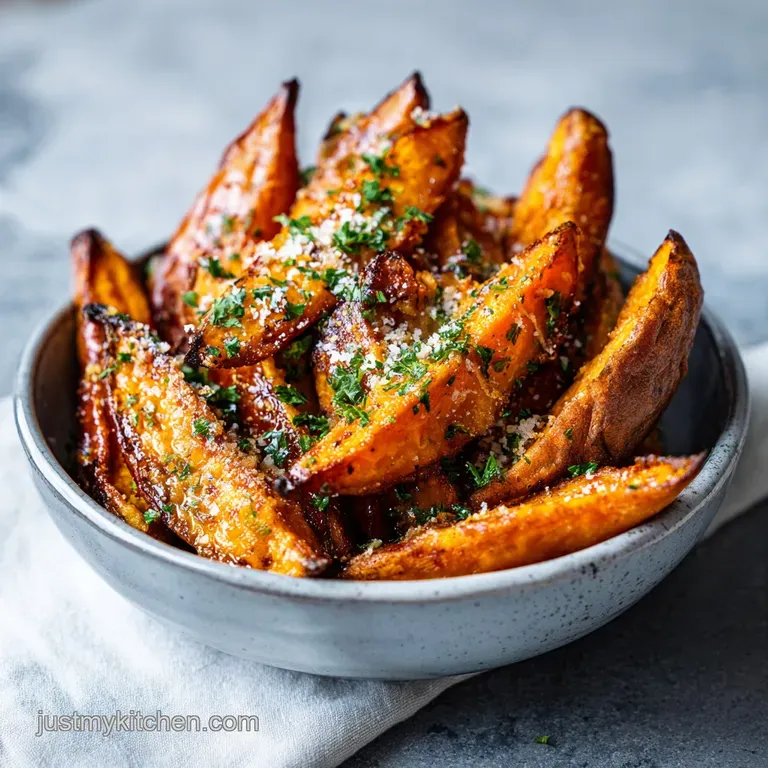
- Time: Active 15 minutes, Passive 25 minutes, Total 40 minutes
- Flavor/Texture Hook: Shatter crisp coating with savory garlic cheese notes
- Perfect for: Weeknight family dinners or quick party appetizers
- Mastering Crispy Sweet Potato Wedges Every Time
- The Physics of the Crunch
- Component Analysis
- The Elements of a Better Fry
- The Tools for the Job
- The Step-by-Step Cooking Flow
- Solving Common Texture Problems
- Flavor Swaps and Simple Scaling
- Storing and Reusing Your Leftovers
- Best Pairings for This Side
- Sweet Potato Wedges FAQs
- 📝 Recipe Card
Mastering Crispy Sweet Potato Wedges Every Time
There is a specific sound I listen for when I pull a tray out of the oven. It is that dry, hollow "clink" when a wedge hits the metal. For years, my kitchen was a graveyard of limp, sad orange sticks that looked more like steamed carrots than fries.
I tried higher heat, lower heat, and every oil under the sun, but they always came out floppy.
Then I realized I was fighting against the sweet potato’s natural chemistry. These tubers are packed with moisture and sugar, which is a recipe for a soggy mess if you don't treat them right.
I started experimenting with surface area and moisture barriers, and honestly, the day I figured out the cornstarch trick was a total turning point for our family taco nights.
Now, when I make these, the aroma of toasted Parmesan and garlic fills the house before the timer even dings. You get that golden, craggy crust that actually holds up when you dunk it into a dip.
No more limp fries, no more disappointment just consistent, savory results that make everyone reach for the last one on the tray.
The Physics of the Crunch
Surface Moisture Removal: Cornstarch acts as a desiccant, absorbing the exterior moisture that usually turns sweet potatoes into steam filled mush. This allows the oil to fry the surface immediately rather than waiting for the water to evaporate.
The Maillard Enhancement: The combination of Parmesan cheese and natural sugars triggers a rapid browning reaction. This creates a complex, savory crust that provides a structural "skeleton" to the wedge, keeping it upright and firm.
Pectin Reinforcement: By roasting at 200°C, we quickly set the internal starch structure. This prevents the pectin from breaking down too far into a watery puree, ensuring the middle remains velvety rather than grainy.
| Cooking Method | Time | Texture Result | Best For |
|---|---|---|---|
| Oven Roast | 25 minutes | Balanced crisp/soft | Big family batches |
| Air Fryer | 18 minutes | Maximum crunch | Quick 1-2 person meals |
| Deep Fry | 6 minutes | Uniform golden shell | Traditional indulgence |
Choosing your method depends on how much time you have. While the air fryer is fast, the oven allows you to spread 900g of potatoes across two trays, ensuring enough airflow so they don't steam each other. If you overcrowd the pan, you lose the "shatter" factor.
Component Analysis
| Ingredient | Science Role | Pro Secret |
|---|---|---|
| Sweet Potato | Sugar/Fiber base | Scrub the skin but don't peel; the skin provides structural integrity. |
| Cornstarch | Moisture barrier | Sift it over the bowl to avoid clumps that turn into white gummy spots. |
| Parmesan | Fat & Protein | Use the "dust" style grated cheese; it sticks better than long shreds. |
| Olive Oil | Heat conductor | Use just enough to coat; too much oil leads to a greasy, heavy finish. |
The Elements of a Better Fry
To get started, we need a few staples. I always suggest using fresh garlic rather than the pre minced jars, as the natural oils in fresh cloves provide a much better "sizzle" against the potato skin.
- 900g large sweet potatoes: Cut into uniform 2cm-thick wedges. Why this? Uniformity ensures every piece finishes cooking at the exact same moment.
- 3 cloves fresh garlic: Finely minced. Why this? Fresh garlic releases sulfur compounds that mellow into sweetness when roasted.
- 30ml extra virgin olive oil: high-quality fat. Why this? It carries the heat and helps the spices adhere to the surface.
- 12g cornstarch: The secret weapon. Why this? It creates the microscopic "nooks" that turn into a crispy shell.
- 5g smoked paprika: For depth. Why this? Adds a subtle wood fired flavor without needing a grill.
- 2g onion powder: Savory base.
- 3g sea salt: Essential seasoning.
- 1g cracked black pepper: For a bite.
- 50g finely grated Parmesan cheese: The umami crust.
- 5g fresh parsley: For a bright finish.
If you find yourself short on cornstarch, you can use arrowroot powder or even a bit of rice flour. They both provide a similar "dry" finish that helps with the crunch. For a different vibe, you might try a Sweet Potato Breakfast recipe which uses a pan searing technique instead of roasting.
The Tools for the Job
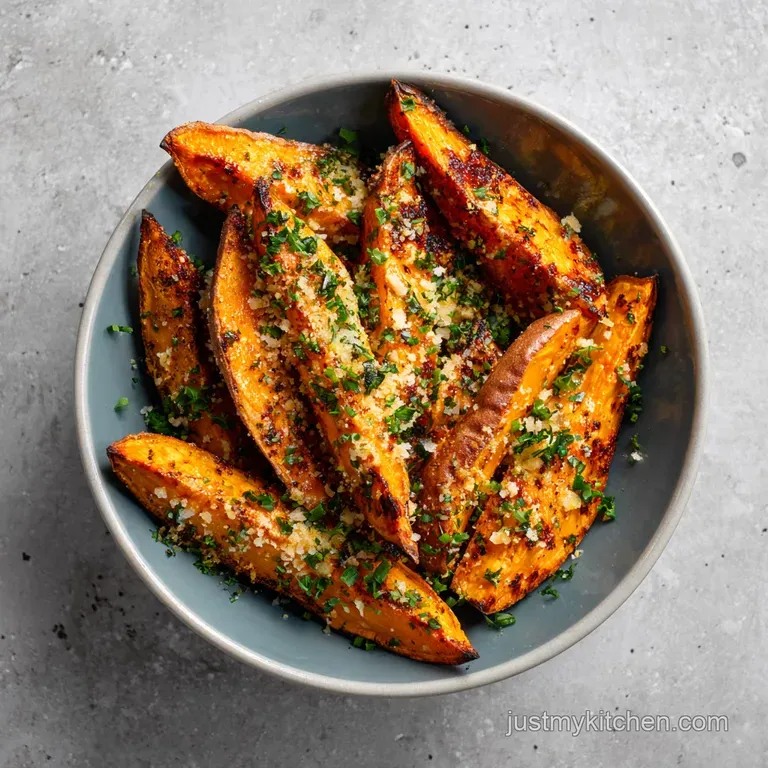
You don't need a professional kitchen, but a couple of items make this a lot easier. First, a large, rimmed baking sheet preferably heavy duty so it doesn't warp in the high heat. A warped pan causes oil to pool in one corner, leaving some fries dry and others greasy.
I also recommend a large mixing bowl. You want enough room to toss the potatoes vigorously. This isn't the time for a delicate stir; you want that cornstarch and oil to emulsify into a light paste that grips the wedges.
Finally, a sharp chef's knife is non negotiable for getting through those tough raw tubers without a struggle.
The step-by-step Cooking Flow
- Heat the oven. Set your rack to the middle position and preheat to 200°C. Note: A hot oven is critical for that initial sear.
- Prep the potatoes. Scrub 900g of sweet potatoes and slice them into 2cm wedges until they look like uniform orange crescents.
- Dry them thoroughly. Use a clean kitchen towel to pat every wedge dry. Note: Any surface water will turn into steam and prevent crisping.
- Toss with oil. Place the wedges in a bowl and drizzle with 30ml olive oil until they glisten evenly.
- Apply the starch. Sift 12g cornstarch over the potatoes and toss again. Note: The potatoes should look slightly chalky and matte.
- Add the aromatics. Sprinkle in the minced garlic, paprika, onion powder, salt, and pepper, tossing until the spices are distributed.
- Arrange the tray. Place the wedges on the baking sheet in a single layer. Ensure no two pieces are touching.
- First roast. Bake for 15 minutes. You should hear a faint sizzle as the natural sugars begin to caramelize.
- The Parmesan flip. Remove the tray, flip the wedges, and sprinkle 50g of Parmesan over the top.
- Final crisp. Roast for another 10 minutes until the cheese is golden and the edges are dark brown.
- Garnish and rest. Let them sit on the tray for 3 minutes before tossing with fresh parsley.
Solving Common Texture Problems
The biggest hurdle with Sweet Potato Wedges is usually the humidity inside the oven. If your oven doesn't vent well, the moisture released from the potatoes stays trapped, creating a sauna effect. This is why we leave space between the wedges.
Why Your Wedges Are Soft
If your fries come out bendy, it’s usually a temperature or crowding issue. If the oven isn't truly at 200°C when you put them in, the starch doesn't "set" quickly enough to hold the structure.
| Problem | Root Cause | Solution |
|---|---|---|
| Soggy middle | Wedges too thick | Slice no thicker than 2cm for even heat penetration. |
| Burnt garlic | Pieces too large | Mince garlic very fine so it melts into the oil coating. |
| Uneven browning | Overcrowded pan | Use two trays or cook in batches to allow airflow. |
Common Mistakes Checklist ✓ Never skip the drying step; surface water is the enemy of the crunch. ✓ Avoid using too much oil; it should coat, not soak, the potatoes. ✓ Don't add the Parmesan at the very start; it can burn before the potato is cooked.
✓ Always preheat the tray if you want an extra crispy bottom. ✓ Use a metal spatula to flip so you don't tear the developing crust.
Flavor Swaps and Simple Scaling
This recipe is incredibly flexible. If you want to double the batch for a crowd, remember that cooking two trays at once will increase the humidity in the oven. I usually increase the cook time by about 5 minutes and swap the tray positions halfway through to ensure even browning.
| Original Ingredient | Substitute | Why It Works |
|---|---|---|
| Parmesan | Nutritional Yeast | Adds a similar nutty, salty bite for a vegan friendly version. |
| Cornstarch | Potato Starch | High amylose content creates an even glassier, crunchier shell. |
| Smoked Paprika | Chili Powder | Switches the flavor profile from "smoky" to "earthy heat." |
When scaling down for a solo snack, I'll often just use one small sweet potato. Since there’s less mass in the oven, they might cook 3-4 minutes faster, so keep a close eye on the browning around the 15 minute mark.
Kitchen Myths to Forget "Soaking sweet potatoes in water makes them crispier." While this works for white potatoes to remove surface starch, sweet potatoes don't have the same starch profile. Soaking often just adds internal moisture that makes them harder to crisp.
"Peeling makes them better." The skin actually helps hold the wedge together. Without it, the soft flesh tends to slump and stick to the pan more easily.
Storing and Reusing Your Leftovers
Leftover Sweet Potato Wedges can be kept in the fridge for up to 4 days. Store them in a container lined with a paper towel to absorb any rising moisture. They will naturally lose their crunch in the fridge, so don't be alarmed when they feel soft the next day.
To bring them back to life, avoid the microwave at all costs it will turn them into mush. Instead, toss them into a hot pan with a tiny drop of oil for 3 minutes, or pop them back into a 200°C oven for 5 minutes.
This re activates the fats and recrisps the starch layer.
For zero waste, those little broken bits at the bottom of the tray are gold. I save them to toss into a salad the next day for a hit of texture. If you have a lot left over, chop them up and use them as a base for a hash with eggs and peppers.
Best Pairings for This Side
These wedges are the ultimate companion for a backyard burger or a roasted chicken. Because they have that savory Parmesan crust, they stand up well to bold dips like spicy aioli or a cool Greek yogurt sauce with lemon and dill.
If you're planning a full spread, these pair beautifully with a Roasted Sweet Potato recipe for a "sweet vs. savory" potato flight. I also love serving them alongside a simple steak. The sweetness of the potato cuts through the richness of the meat, and the garlic notes tie the whole plate together.
Trust me on this: make more than you think you need. Even the most disciplined eaters tend to "sample" these straight off the baking sheet before they even hit the dinner table. There is something about that warm, salty, cheesy crunch that is completely addictive.
Enjoy the process, watch for that golden color, and listen for the clink!
Sweet Potato Wedges FAQs
Why are my sweet potato wedges not crispy?
They are likely soggy due to trapped moisture or low heat. For maximum crispness, you must dry the wedges completely and toss them with cornstarch before baking them in a very hot oven. If you are looking for a crispy texture, mastering the starch application is key, much like ensuring proper oil suspension when making a flavorful spread like our Sweet Butter Board recipe.
Why do you need to soak sweet potatoes before frying?
No, you do not need to soak them for crisping wedges. Soaking is primarily used for white potatoes to leach out excess surface starch, which helps them crisp when deep fried or roasted.
Sweet potatoes contain more sugar and less starch, so soaking often just adds internal moisture, making them harder to dry out for a crunchy exterior.
What does Texas Roadhouse put on their loaded sweet potatoes?
They typically use a melted butter and brown sugar glaze, often topped with cinnamon or pecans. For their fully loaded version, expect marshmallow topping, butter, and a sprinkle of cinnamon sugar. If you enjoy sweet and savory combinations, this flavor profile is similar to the balance achieved in our Strawberry Crunch Bites recipe, just adapted for a savory side.
Should you peel sweet potatoes before making wedges?
No, it is better to leave the skins on. The skin helps the wedge maintain its structural integrity during high heat cooking, preventing the soft flesh from collapsing or sticking badly to the pan. When roasting at high heat, the skin also crisps nicely, adding a welcome textural contrast.
How do I get the Parmesan cheese to stick and brown without burning?
Add the Parmesan cheese during the last 10 minutes of baking. The potato must be mostly cooked first, otherwise the high fat and protein content in the cheese will burn before the interior softens. This two-stage roasting process ensures the surface sets before adding the final crust ingredient.
What is the secret to making oven-roasted wedges as crispy as fried ones?
The secret is coating the wedges with cornstarch before oiling. The cornstarch absorbs surface moisture and creates a dry, porous layer that fries immediately in the hot oven, forming a structural shell. If you want to explore another technique that relies on precise heat application for texture, review our guide on achieving perfect results in the Crispy Breakfast Potatoes recipe.
Can I substitute sweet potatoes with white potatoes for this recipe?
Yes, but adjust your technique slightly for best results. White potatoes contain more surface starch, so you might want to rinse or even briefly soak them to prevent them from turning gummy. You will likely need a shorter initial cooking time since they have less internal sugar content to break down.
Garlic Parmesan Sweet Potato Wedges
Ingredients:
Instructions:
Nutrition Facts:
| Calories | 315 kcal |
|---|---|
| Protein | 8.2 g |
| Fat | 10.1 g |
| Carbs | 49.6 g |
| Fiber | 7.1 g |
| Sugar | 9.5 g |
| Sodium | 465 mg |
