Brown Sugar Pineapple Chicken: Sticky Glaze Recipe
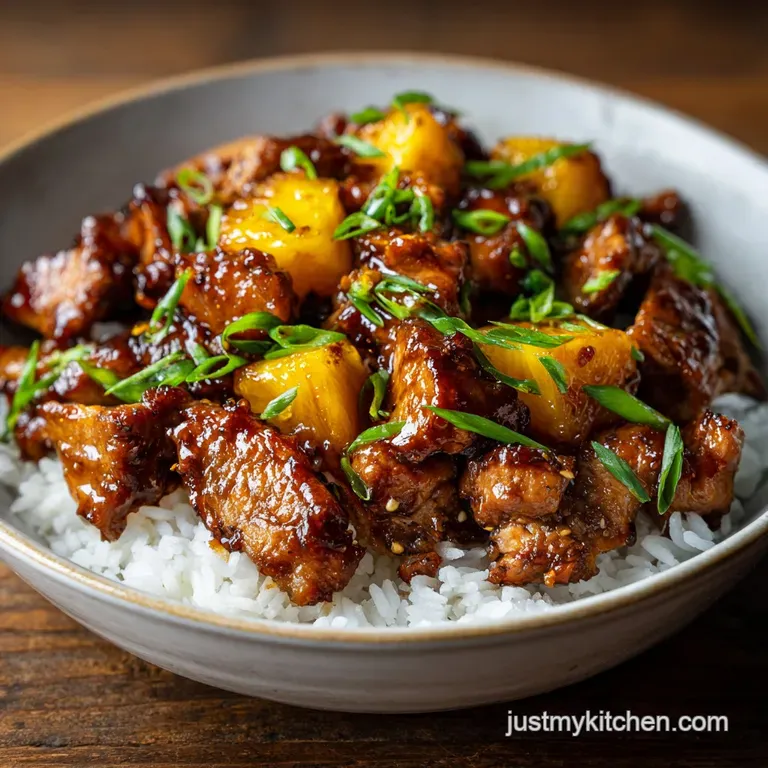
- Time: Active 15 minutes, Passive 20 minutes, Total 35 minutes
- Flavor/Texture Hook: Sticky sweet glaze with a zesty ginger kick and caramelized edges
- Perfect for: Busy weeknights when you need a 30 minute win that the kids will actually eat
- Why This Brown Sugar Pineapple Chicken Wins Weeknight Dinner
- The Science Behind That Sticky Caramelized Glaze
- Understanding the Flavor Profile of Your Components
- Selecting the Best Elements for Your Fry
- Essential Tools for a Quick Kitchen
- Bringing Your Brown Sugar Pineapple Chicken to Life
- Overcoming Common Cooking Hurdles in the Kitchen
- Adjusting Portions for Groups or Solo Meals
- Debunking Common Myths About Tropical Stir Fries
- Keeping Leftovers Fresh and Using Every Scrap
- Finishing Your Plate with Style and Crunch
- Very High in Sodium
- Recipe FAQs
- 📝 Recipe Card
Why This Brown Sugar Pineapple Chicken Wins Weeknight Dinner
Picture this: you've had a long day, the fridge is looking sparse, and the "what's for dinner?" dread is setting in. Then, the smell of searing chicken thighs hits the air, followed by that sharp, tropical sweetness of pineapple juice hitting a hot pan.
That's the moment the kitchen transforms into a Hawaiian escape, and honestly, the sizzle alone is enough to cure a bad mood. It's one of those meals where the aroma pulls everyone into the kitchen before you even set the table.
I used to struggle with stir fries that turned out watery or chicken that tasted like boiled rubber. We've all been there, right? You're trying to be healthy, but the meal ends up sad and grey.
But after a few sticky messes and a lot of trial and error, I figured out the secret to that glossy finish without needing a deep fryer. It's all about the timing of the reduction and the specific balance of that dark brown sugar. It’s a total lifesaver for my family on Tuesdays.
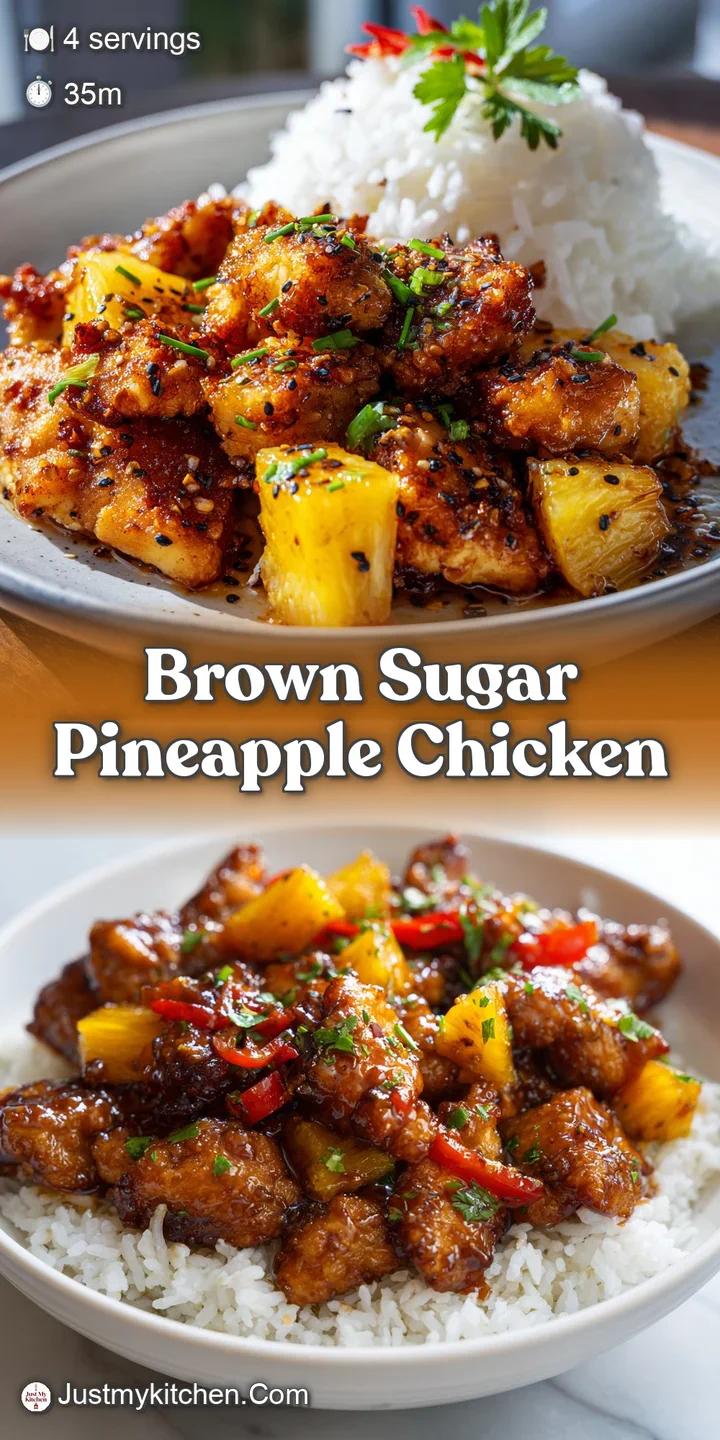
This recipe is my go to when I want something that feels like a treat but takes less time than ordering takeout. We're talking 35 minutes from cutting board to table. It's juicy, it's punchy, and it has those charred, caramelized pineapple bits that everyone fights over at the end.
It's basically a hug in a bowl, and I can't wait for you to try it. Let’s get into how to make it happen in your own kitchen without any fuss.
The Science Behind That Sticky Caramelized Glaze
- Maillard Magic: Searing the chicken at high heat creates complex flavor compounds on the surface that the sugar later clings to, preventing the meat from tasting "boiled."
- Enzymatic Tenderizing: Bromelain, a natural enzyme in the pineapple juice, breaks down tough protein fibers, making the chicken exceptionally tender and velvety.
- Sucrose Viscosity: As the water evaporates from the juice, the brown sugar creates a stable, thick syrup through a process called reduction, which allows the sauce to coat the meat rather than pooling at the bottom.
| Thickness | Internal Temp | Rest Time | Visual Cue |
|---|---|---|---|
| 1 inch chunks | 165°F | 3 minutes | No pink, juice runs clear |
| 1/2 inch strips | 165°F | 2 minutes | Opaque center, firm touch |
| Whole thighs | 170°F | 5 minutes | Golden exterior, juicy middle |
Using chicken thighs is a total game changer for this specific method. Because they have a higher fat content than breasts, they can handle the intense heat required to reduce the sauce without becoming stringy.
If you've ever had a stir fry where the meat feels like wood, it's usually because the lean protein gave up all its moisture before the sauce was ready.
Understanding the Flavor Profile of Your Components
| Ingredient | Science Role | Pro Secret |
|---|---|---|
| Dark Brown Sugar | Humectant & Sweetener | Use dark sugar for more molasses and a deeper, mahogany color |
| Pineapple Juice | Acidic Tenderizer | The acid balances the salt from the soy, creating a "round" flavor |
| Chicken Thighs | Fat & Protein Base | Fat carries the ginger and garlic flavors deeper into the meat |
| Rice Vinegar | pH Balancer | A tiny amount of acid prevents the sugar from feeling cloyingly sweet |
Choosing the right liquid for your base is just as important as the meat itself. While some people reach for water or stock, the pineapple juice provides both the liquid and the sugar necessary for that iconic shine. It’s similar to the technique used in a Teriyaki Chicken recipe, where the sugar and soy work together to create a natural glaze that doesn't need cornstarch to stay thick.
Selecting the Best Elements for Your Fry
- 1.5 lbs boneless skinless chicken thighs Why this? They stay incredibly juicy even during a over high heat reduction.
- Substitute: Chicken breasts (Note: reduce cook time by 2 minutes).
- 1 tsp kosher salt Why this? Draws out surface moisture for a better sear.
- Substitute: Sea salt (use slightly less as the grains are finer).
- 1/2 tsp cracked black pepper Why this? Provides a sharp contrast to the sweet pineapple.
- Substitute: White pepper (for a more earthy, subtle heat).
- 1 tbsp neutral oil Why this? High smoke point prevents the pan from burning.
- Substitute: Avocado oil or grapeseed oil.
- 3/4 cup unsweetened pineapple juice Why this? The foundation of our glaze and tenderizing agent.
- Substitute: Orange juice (adds a floral citrus note).
- 1/2 cup dark brown sugar, packed Why this? Molasses adds depth and helps the sauce thicken.
- Substitute: Light brown sugar or honey (glaze will be lighter).
- 1/4 cup low sodium soy sauce Why this? Adds salt and umami without overwhelming the fruit.
- Substitute: Tamari (for a gluten-free version).
- 1 tbsp rice vinegar Why this? Cuts the sweetness for a balanced finish.
- Substitute: Apple cider vinegar.
- 2 cloves garlic, minced Why this? Essential aromatic for that savory punch.
- Substitute: 1/2 tsp garlic powder in a pinch.
- 1 tsp fresh ginger, grated Why this? Adds a zingy heat that cuts through the sugar.
- Substitute: 1/4 tsp ground ginger.
- 1 cup fresh pineapple chunks Why this? Fresh fruit holds its structure better when heated.
- Substitute: Canned pineapple (drain well).
- 1 red bell pepper, cut into 1 inch squares Why this? Adds crunch and a beautiful visual pop.
- Substitute: Snap peas or green bell pepper.
- 2 green onions, thinly sliced Why this? Provides a fresh, sharp finish to the rich sauce.
- Substitute: Fresh chives.
Chef's Tip: Freeze your fresh ginger for 10 minutes before grating. It makes it much firmer and prevents it from turning into a stringy mush on your grater.
Essential Tools for a Quick Kitchen
For this recipe, we are keeping things ultra simple. You don't need a fancy wok to get restaurant results. A large, heavy bottomed skillet is your best friend here. I personally love using a 12 inch cast iron skillet because it holds heat like a champ, which is exactly what you need when you pour in that cold juice.
If the pan temperature drops too much, the chicken will steam instead of sear.
The only other things you'll really need are a solid whisk to combine the sauce and a microplane. If you don't have a microplane for the ginger and garlic, a fine grater or even a sharp knife works, but the goal is to get them as small as possible so they dissolve into the sauce.
This ensures every bite has that aromatic kick without you biting into a huge chunk of raw ginger.
Bringing Your Brown Sugar Pineapple Chicken to Life
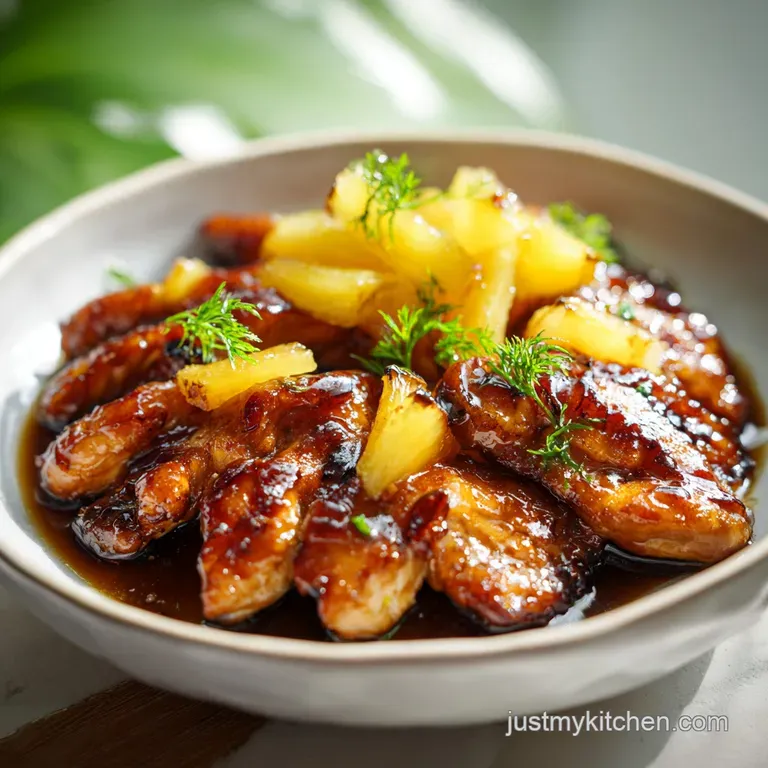
- Pat the 1.5 lbs chicken thighs completely dry with paper towels. Note: This is the most important step for a good sear.
- Season the meat evenly with 1 tsp kosher salt and 1/2 tsp cracked black pepper.
- Heat 1 tbsp neutral oil in your skillet over medium high heat until it shimmers and just begins to smoke.
- Add the chicken in a single layer and sear for 5-6 minutes until the edges are crisp and deep golden brown.
- Remove the chicken from the pan and set it aside on a plate; don't worry if it isn't cooked through yet.
- Toss the red bell pepper squares into the hot pan and sauté for 2-3 minutes until they are softened but still have a snap.
- Stir in the 2 cloves minced garlic and 1 tsp grated ginger, cooking for only 30 seconds until the aroma fills the room.
- Pour in the 3/4 cup pineapple juice, 1/2 cup dark brown sugar, 1/4 cup soy sauce, and 1 tbsp rice vinegar.
- Whisk the mixture and let it come to a vigorous boil for about 5 minutes until the bubbles get large and the sauce looks velvety.
- Return the chicken and any juices to the pan along with 1 cup pineapple chunks.
- Toss everything together for 2-3 minutes until the glaze is thick, sticky, and clings to every piece.
- Turn off the heat and garnish with the sliced green onions before serving.
Overcoming Common Cooking Hurdles in the Kitchen
Why Your Sauce Might Be Runny
If your sauce looks more like a soup than a sticky glaze, it’s usually a matter of patience. The sugar and juice need to reduce significantly to reach that "syrup" stage. If you find it's still too thin after 5 minutes of boiling, turn the heat up a notch.
Just be careful not to walk away, as it can go from perfect to burnt in a matter of seconds once the water has evaporated.
Solving the Bitter Garlic Problem
Garlic is delicate. If you throw it into a ripping hot pan and let it sit for two minutes, it will burn and turn the whole dish bitter. The trick is to add it just before you pour in the liquids.
The moisture from the juice and soy sauce will immediately drop the temperature of the pan, stopping the garlic from scorching while still letting it release its flavor.
| Problem | Root Cause | Solution |
|---|---|---|
| Chicken is tough | Meat was boiled, not seared | Pat chicken dry and use a hotter pan next time |
| Glaze is too salty | Used regular soy sauce | Swap for low sodium or add a splash of water |
| Fruit is mushy | Added pineapple too early | Only add fresh fruit in the last 2 minutes |
Common Mistakes Checklist
- ✓ Using a pan that is too small (overcrowding causes steaming).
- ✓ Not letting the sauce reach a full, rolling boil to activate the sugar.
- ✓ Skipping the rice vinegar (the dish will taste too heavy).
- ✓ Using canned pineapple with "heavy syrup" (it will be cloyingly sweet).
- ✓ Forgetting to let the chicken rest for a few minutes before serving.
Adjusting Portions for Groups or Solo Meals
Scaling this recipe is fairly straightforward, but there are a few rules to follow. If you are cutting the recipe in half for two people, go ahead and halve the chicken and vegetables. However, I suggest only reducing the sauce components by about 25%.
You need enough liquid volume in the pan to prevent the sugar from burning before the chicken is cooked through. A tiny bit of sauce in a big pan will vanish instantly.
When doubling the recipe for a crowd, do not try to fit 3 lbs of chicken into one skillet. You’ll end up with a grey, watery mess. Instead, sear the chicken in two batches. You can then combine everything in one large pot or a deep sauté pan once you add the sauce.
For the spices and salt, increase them to 1.5x rather than a full 2x to avoid over seasoning, then taste and adjust at the end.
| Standard (4) | Small Batch (2) | Big Batch (8) | Pan Size |
|---|---|---|---|
| 1.5 lbs chicken | 0.75 lbs chicken | 3 lbs chicken | 12 inch skillet |
| 3/4 cup juice | 1/2 cup juice | 1.5 cups juice | Large sauté pan |
| 1 cup pineapple | 1/2 cup pineapple | 2 cups pineapple | Two skillets |
Debunking Common Myths About Tropical Stir Fries
"Fresh pineapple juice is always better than canned." Actually, for this specific recipe, canned unsweetened juice is often more reliable. Fresh juice contains much higher levels of the enzyme bromelain, which can actually turn your chicken into mush if it sits for too long.
Canned juice is pasteurized, which tones down that enzyme, giving you a perfect tenderize without the "baby food" texture.
"You must marinate the chicken for at least an hour." Honestly, don't even bother. Because we are making a heavy, sugar based glaze that reduces around the meat, a marinade won't actually penetrate deep enough to make a difference in that short time. The flavor comes from the lacquered coating on the outside.
Save yourself the hour and just start cooking.
Keeping Leftovers Fresh and Using Every Scrap
Store any leftovers in an airtight glass container in the fridge for up to 3 days. This dish actually reheats surprisingly well, but I recommend doing it in a skillet over medium heat with a tiny splash of water to loosen the glaze. If you use the microwave, the chicken can get a bit rubbery, so keep an eye on it!
Zero Waste Tip: Don't throw away those green onion roots or the pineapple skin. You can put the onion roots in a small jar of water on your windowsill to regrow them.
For the pineapple skins, you can boil them with a cinnamon stick and a little honey to make a refreshing "te de piña" that is incredibly popular in many cultures for digestion.
Finishing Your Plate with Style and Crunch
I almost always serve this over a massive pile of fluffy jasmine rice. It acts like a sponge for that velvety sauce, and there's nothing better than the last few bites of sauce soaked rice. If you're looking for a lower carb option, cauliflower rice works, but the texture won't be as satisfying. This meal also pairs beautifully with a side of steamed bok choy or even our Beef and Broccoli recipe if you're hosting a big family dinner and want variety.
If you want to get fancy, top the whole thing with toasted sesame seeds or even some macadamia nuts for a true Hawaiian vibe. The crunch of the nuts against the soft, juicy chicken is incredible. Just make sure to add the garnishes at the very last second so they don't lose their texture in the steam. Trust me, once you see that glaze shatter as you bite into it, you'll never go back to bottled sauce again! For another quick option, you might also like the speed of an Air Fryer Whole Chicken recipe for those nights when you just want to set it and forget it.
Very High in Sodium
1180 mg 1180 mg of sodium per serving (51% 51% of daily value)
The American Heart Association recommends limiting sodium intake to approximately 2,300mg per day for adults. High sodium intake can increase the risk of high blood pressure and heart disease.
Smart Swaps to Lower Sodium
-
Dilute Soy Sauce-20%
Use half the amount of low-sodium soy sauce and replace the rest with water or unsalted chicken broth. This significantly reduces the sodium content of the sauce without drastically changing the flavor.
-
Reduce Salt-15%
Reduce the amount of kosher salt by half (0.5 tsp) or eliminate it altogether. Taste the dish before adding any additional salt at the end.
-
Fresh Over Processed-10%
Ensure the pineapple juice is 100% juice with no added sodium. Better yet, use more fresh pineapple and reduce the juice altogether.
-
Adjust Brown Sugar-5%
Reduce the amount of brown sugar slightly. The sweetness can mask the absence of some sodium, improving the palatability of the reduced sodium dish. Try reducing by 2 tablespoons.
-
Spice It Up!
Enhance the flavor with sodium free herbs and spices like garlic powder, onion powder, smoked paprika, or red pepper flakes to compensate for the reduced salt.
Recipe FAQs
Can I use chicken breasts instead of thighs for this recipe?
Yes, but reduce the cooking time. Breasts are leaner and will dry out quickly when reducing the sauce; aim to remove them from the pan 1-2 minutes sooner than the recipe suggests.
How do I get the glaze thick enough without burning the sugar?
Bring the liquids to a full, rolling boil, then reduce heat slightly. The evaporation of water is what thickens the sugar syrup; use a large pan so the liquid spreads thin enough to reduce quickly without scorching the bottom.
Is it true that fresh pineapple juice will make the chicken mushy?
Yes, it is possible if overcooked. Fresh pineapple contains the enzyme bromelain, which tenderizes aggressively; use canned, unsweetened juice for more predictable results or add fresh pineapple chunks only in the last minute of cooking.
How to prevent the garlic and ginger from turning bitter during cooking?
Add aromatics only after the chicken is seared and just before pouring in the liquids. The liquid immediately cools the pan, ensuring the garlic sweats out flavor instead of burning on the hot surface.
What is the best way to serve this dish for a balanced meal?
Serve over steamed jasmine rice to soak up the excess glaze. For added nutrition, include steamed green vegetables like broccoli or snap peas to contrast the richness of the chicken.
If I don't have dark brown sugar, what is the best substitute?
Use light brown sugar, but increase the soy sauce slightly. Dark brown sugar provides molasses depth; if you use light sugar, a small boost of umami from the soy helps balance the final flavor profile.
How far in advance can I prepare the sticky sauce base?
Prepare the sauce components (minus the chicken) up to three days ahead. Store the mixed liquids and sugars in an airtight jar in the refrigerator; simply pour and reduce when ready to cook, similar to how we manage the glaze base in our Caramel Popcorn Recipe.
Brown Sugar Pineapple Chicken
Ingredients:
Instructions:
Nutrition Facts:
| Calories | 542 kcal |
|---|---|
| Protein | 36.8 g |
| Fat | 24.8 g |
| Carbs | 42.5 g |
| Fiber | 1.4 g |
| Sugar | 38.2 g |
| Sodium | 1180 mg |
